

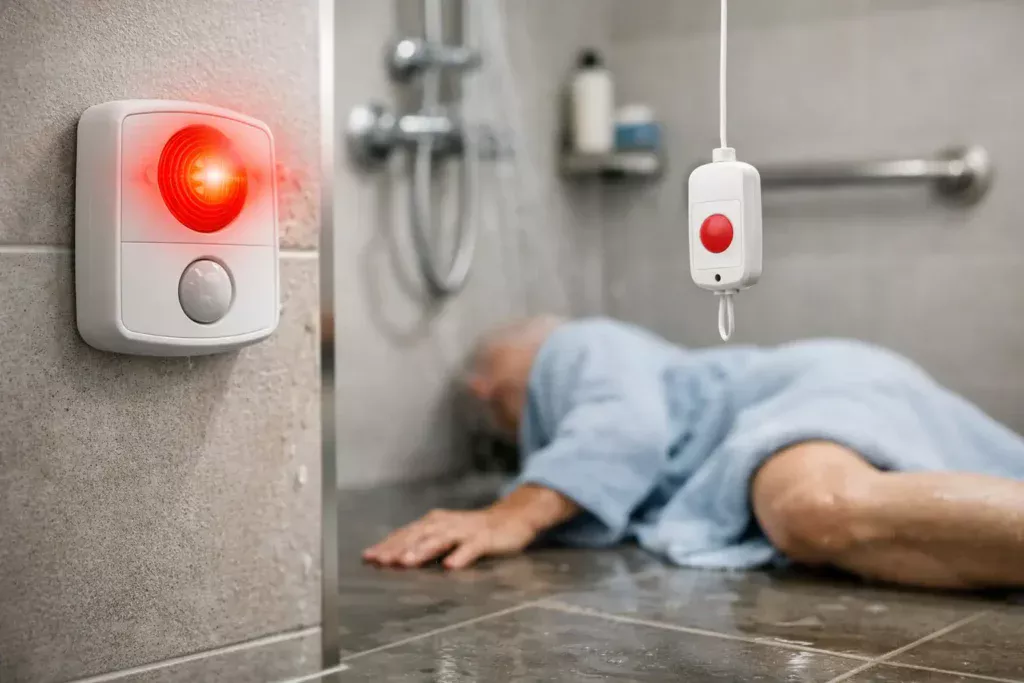
A bathroom fall can happen in seconds. A wet floor, a moment of dizziness or a leg that suddenly gives way can leave someone hurt, cold and unable to reach the door. Alarms for shower safety are designed for this exact situation: helping you summon support when a phone is out of reach and you need help straight away.
For many people, the shower is one of the few times a personal alarm is removed. That creates a gap in protection at a time when slips and falls are more likely. Choosing an alarm that can stay on in water means safety does not have to interrupt a normal routine.
Bathrooms combine several risks in a small space. Water makes surfaces slippery, steam can make some people feel faint, and getting in or out of a bath or shower can test balance and strength. Long-term conditions, medication changes, reduced mobility and recovering from an illness can all make that risk greater.
The concern is not only the fall itself. It is what happens afterwards. A person may be unable to stand, may have injured a hip or wrist, or may feel confused and struggle to call out. If they live alone, family members may not know there is a problem until much later.
That does not mean someone has to stop showering independently or have another person waiting outside the bathroom. The right support should protect privacy as well as safety. A wearable alarm gives the wearer a direct way to ask for help, while their family gains reassurance that they are not unprotected behind a closed door.
A suitable shower alarm needs to work in real life, not just on a product specification sheet. The first requirement is clear: it must be genuinely waterproof for shower use. Water-resistant can mean a device tolerates a splash, but may not be intended to stay on during regular washing. Check the manufacturer’s guidance carefully before relying on any device in the shower.
It should also be easy to activate with wet hands, shaky hands or limited dexterity. Tiny buttons, touchscreens and complicated menus can be difficult at the very moment they are needed. A simple action, such as pressing or squeezing clearly positioned buttons, is easier to remember and more reliable under pressure.
Battery life matters just as much. A pendant or wristband cannot help if it has been taken off to charge and forgotten on a bedside table. Regular charging may work well for a confident technology user with a predictable routine. For someone who dislikes devices or is already managing medication, appointments and mobility difficulties, a long-life battery removes one more task and one more potential gap in protection.
Finally, consider where the alarm sends the alert. Some systems only work within a limited distance of a base unit. Others can use a connected mobile phone when the wearer is away from home. A home-and-away option can be particularly useful for people who want the same familiar protection in the garden, at the shops, visiting friends or on holiday in the UK.
There are different ways an alarm can raise concern. Manual SOS alerts are essential because not every emergency is a fall. Chest pain, severe breathlessness, weakness, feeling unwell or becoming frightened in the shower may all mean help is needed. The wearer should be able to trigger an alert without explaining what has happened first.
Scheduled check-ins add another layer of reassurance. At an agreed time, the wearer confirms that they are OK. If they do not respond, chosen family members or carers can be alerted to check in. This can be useful for a person who values living alone but has recently become less steady or has had a spell of poor health.
Automatic fall detection can help following a severe fall, particularly if the wearer is unconscious or cannot press the alarm. It should not be treated as a replacement for a manual alert. Not every fall has the same movement pattern, and a device cannot always know whether someone needs assistance. The strongest approach gives the wearer a simple SOS option and adds fall detection as extra protection.
The safest alarm is the one that is actually worn. That is why comfort, discretion and habit are so important. A wrist-worn alarm can become part of getting dressed in the morning and stay on through the day, overnight and into the shower. There is less chance of it being left on a shelf than a device that must be remembered only for certain activities.
Before relying on a system, agree who will receive alerts and what they should do. A nearby relative may be able to get to the house quickly. Someone further away may need to call a neighbour, carer or emergency service. Make sure everybody understands their role, and keep contact details current if circumstances change.
It is also sensible to test the alarm when it arrives. Test it from the bathroom, with the door shut, as well as from rooms and areas used every day. If the system uses a base station, its position can affect coverage. If it works through a smartphone when away from home, make sure the wearer is comfortable keeping their phone nearby when out and about.
An alarm is most effective alongside a few practical bathroom changes. A non-slip mat, grab rails fitted in the right place, a shower seat where appropriate and good lighting can all reduce risk. These measures are not about taking over someone’s home. They are small adjustments that can make an independent routine feel safer and more manageable.
Only if it is specifically designed and approved for shower use. Do not assume a watch, pendant or phone is safe around running water. A shower-safe wearable is intended to remain on the body, so help is available without asking the wearer to remember to remove and replace it.
This is where automatic fall detection may offer valuable additional support. It can recognise certain severe falls and send an alert, but it has limits. A manual SOS feature remains important for illnesses, near-falls and situations where the wearer needs help but has not fallen.
Pull cords can be helpful, especially where they are already installed, but they only work if the person can reach them. A wearable alarm stays with the wearer if they fall away from the cord or become unwell while moving around the bathroom. For many homes, it is a more personal and flexible form of protection.
Often, the opposite is true. The knowledge that help can be called may give someone the confidence to keep washing, dressing, sleeping and going out in their own way. The best safety technology stays quietly in the background until it is needed.
A shower-safe alarm should fit the whole routine, not solve one risk while creating another. Acticheck is designed to be worn in bed and in the shower, with a waterproof, pacemaker-safe wristband that lasts a full year without recharging. At home, its base station provides coverage around the home and garden; when out, its smartphone app can extend protection while the phone is nearby.
Whatever alarm you choose, focus on the moments when a loved one may not be able to reach a phone or call out. The aim is not to make daily life feel medical or restricted. It is to make sure that, if something happens in the shower, help is at hand and independence can continue with greater confidence.