

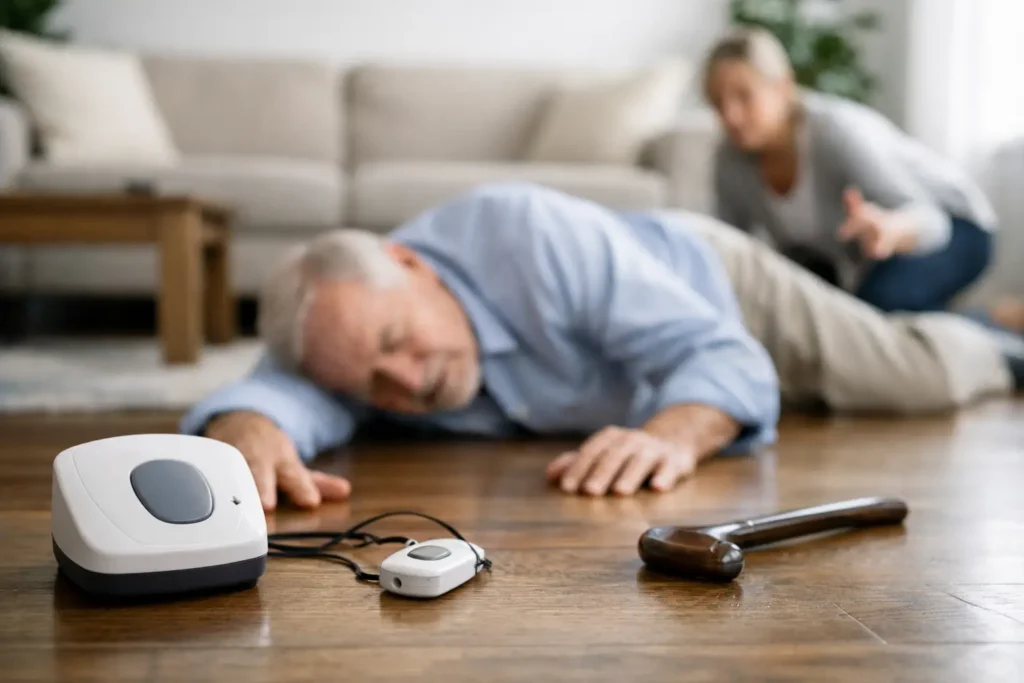
A fall can happen in seconds, but the worry often comes from what follows: being unable to reach a phone, call out, or let somebody know you need help. So, do fall alarms work? They can make a meaningful difference, provided the alarm is worn consistently, is suited to the person using it, and can alert the right people when help is needed.
A good fall alarm is not there to take away independence. It is there to support it. For someone living alone, or for family members who cannot be there every day, knowing that help can be requested quickly can make daily life feel safer and more manageable.
Fall alarms work by creating a way to raise an alert when someone may be unable to get help for themselves. Depending on the type of system, this may happen automatically after a severe fall, manually when the wearer presses or squeezes an SOS button, or when they miss an expected check-in.
The most effective systems do not rely on one method alone. Falls are unpredictable, and not every emergency looks the same. Someone might slip in the bathroom, feel faint in the garden, become unwell in bed, or have a sudden loss of confidence while out shopping. In some situations they may be able to call for help. In others, they may not.
That is why a personal alarm with several ways to trigger an alert can offer stronger protection than a device that only detects falls. Automatic detection is useful when a person is unable to act, but a manual SOS alert matters just as much for illnesses, pain, dizziness, breathlessness or any situation that does not involve a fall.
Automatic fall detection uses sensors to recognise patterns associated with a serious fall, such as a sudden movement followed by impact and inactivity. When the device identifies that pattern, it can send an alert to nominated family members, friends or carers.
This can be especially valuable if someone is unconscious, confused, injured, or unable to move after a fall. It gives the family a prompt to check what has happened and arrange help if needed, rather than waiting until a routine phone call or visit reveals there is a problem.
It is also helpful for people whose falls risk is higher because of reduced mobility, a neurological condition, poor balance, fainting episodes, medication changes or recovery after illness. The reassurance is practical: if something serious happens, there is a route to getting somebody’s attention.
But fall detection is not a guarantee that every fall will be identified. A slow slide from a chair, a stumble that ends gently, or a fall where the wristband does not experience a clear impact may not trigger an automatic alert. Equally, a sudden arm movement or accidental knock can occasionally resemble a fall. This is why automatic fall detection should be treated as one layer of protection, not the whole plan.
Many emergencies are not falls. A person may have chest pain, feel weak, be unable to get up after kneeling, or simply feel unsafe. In these moments, an easy-to-use manual alert can be more useful than waiting for an automatic system to decide something is wrong.
The simpler the action, the better. A wristband that can be activated by squeezing buttons is easier to use under stress than a phone left in another room, particularly for someone with limited dexterity, poor eyesight or little confidence with technology.
Manual alarms also allow the wearer to stay in control. They do not need to prove that an event meets a device’s definition of a fall. If they need help, they can ask for it. That supports dignity as well as safety.
A fall alarm can be helpful even when there has been no fall at all. One of the hardest situations for families is not knowing whether a loved one is alright. They may not answer the phone because they are busy, asleep, have misplaced it, or are unwell and unable to respond.
Scheduled check-ins provide another practical safeguard. The wearer confirms that they are alright at an agreed time. If that check-in is missed, the system can alert the people chosen to respond. It is a gentle routine rather than an intrusion, and it can be particularly reassuring for families who live some distance away.
This approach recognises an important fact: safety monitoring is not only about detecting dramatic events. It is also about reducing the chance that an illness, fall or period of distress goes unnoticed for too long.
A fall alarm works best when it fits naturally into everyday life. If it is uncomfortable, needs regular charging, is difficult to operate, or only works in one part of the house, it may end up in a drawer when it is needed most.
For dependable protection, consider where the person spends their time. Bathrooms and bedrooms matter because many falls happen during everyday routines. The garden matters too, especially for people who enjoy pottering outdoors. Protection while visiting family, going on holiday or popping to the shops can be equally important.
A wearable should be easy to keep on through these moments. A waterproof wristband can be worn in the shower, while a long battery life removes the risk of discovering it is flat after it has been left charging. For people with pacemakers, checking that a device is suitable for use is another sensible step.
At home, systems that use a dedicated base station can provide reliable coverage around the house and garden. Away from home, some alarms use a smartphone connection so that alerts can still be sent while the wearer is out, as long as their phone is nearby. The right choice depends on the person’s routine, their mobile phone confidence and the places where they need reassurance.
The question is not simply whether a device has fall detection. It is whether it will still work when it matters. Before choosing a fall alarm, families should understand who receives an alert, how quickly they are expected to respond, and what happens if the first person does not answer.
It is also worth checking whether the wearer can easily test the SOS function, whether the alarm covers both home and time away, and whether it needs daily or weekly charging. A system only protects someone when it is on their wrist and ready to use.
Talk openly with the person who will wear it. Some people welcome an alarm immediately; others worry that it makes them appear less capable. Framing it as a way to keep doing the things they value can help. The aim is not to monitor every movement. It is to make sure help is at hand if something goes wrong.
Even the best personal alarm cannot prevent every fall. It should sit alongside practical steps such as reviewing trip hazards, using suitable footwear, keeping commonly used items within reach, checking eyesight and discussing repeated falls with a GP or healthcare professional.
Family response plans matter too. Everyone nominated to receive alerts should know what to do: try calling first, contact a neighbour with a spare key if appropriate, and call emergency services where there is immediate danger or no response. Agreeing this in advance avoids confusion at a stressful time.
Acticheck brings automatic severe-fall detection, a squeeze-to-alert SOS function and scheduled “I’m OK” check-ins together in one wearable wristband, designed to provide protection at home, in the garden and when the wearer is out with their phone nearby.
The right fall alarm cannot remove every risk, but it can shorten the time between an emergency and somebody knowing about it. For a person living independently, that can mean more confidence to carry on with their usual day. For you and your family, it can mean reassurance that, whatever happens, help can be closer at hand.