

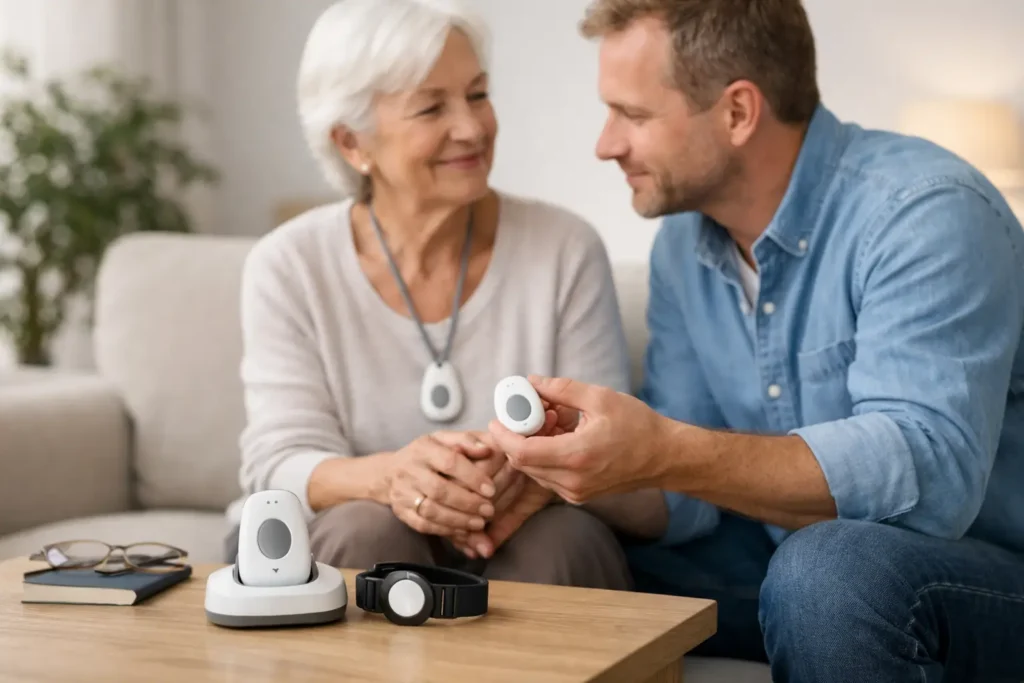
A five-star rating can be reassuring, but fall alarm reviews are most useful when they describe a real moment of need: a fall in the bathroom, sudden dizziness in the garden, or a missed call that prompts a family member to check in. For someone living independently, the right alarm is not simply a gadget. It is a quiet way to make sure help is at hand if something goes wrong.
The difficulty is knowing which reviews reflect dependable everyday protection and which focus only on a quick delivery or an attractive first impression. A personal alarm needs to work when its wearer is tired, unwell, frightened or unable to reach a phone. That is the standard worth applying as you read.
The strongest reviews explain what happened before, during and after an alert. They tell you whether the person could wear the alarm comfortably every day, whether relatives received an alert promptly, and whether the system was simple enough to use without repeated reminders.
Look for comments from people whose routine resembles your own or your loved one’s. Someone who is unsteady on their feet may care most about fall detection and shower-safe wear. A person living alone with a health condition may value a simple way to call for help, plus regular check-ins that flag if they do not respond. For an adult child living some distance away, the key issue may be whether they can be included in alerts and act quickly.
Reviews are less helpful when they only say an alarm is “easy” or “brilliant” without explaining why. Easy can mean different things to different people. A useful review might say that the wristband was worn overnight without discomfort, that there was no charger to remember, or that the wearer could raise an alert by squeezing buttons rather than finding and operating a phone.
A high overall score is a good starting point, not the whole decision. Read a selection of recent reviews, including the less enthusiastic ones. A fair criticism can reveal whether a limitation would matter in your circumstances.
For example, some alarms are designed mainly for use indoors. That may be suitable for someone who rarely goes beyond their front door, but it may not provide reassurance for a person who spends time in the garden, visits friends or goes to local appointments. Other devices rely heavily on a smartphone connection. This can offer useful protection away from home, but it depends on the phone being nearby, charged and connected.
Also notice how a provider responds when customers need help with set-up or have a question. Personal alarm support is not only about resolving a technical issue. It can be the difference between a device sitting in a drawer and a safety routine that becomes part of everyday life.
A fall alarm is usually a combination of a wearable device, a way of sending alerts and the people who receive them. Reviews may praise the wristband while saying little about whether alerts were clear, who was contacted, or what happened if the first person did not respond.
Check whether the review explains the ongoing service as well as the product. Are family members able to receive notifications? Can the wearer choose trusted contacts? Is there a subscription or monitoring cost after purchase? There is no single right arrangement. Some families prefer alerts sent directly to relatives or friends, while others want a professional monitoring centre. What matters is that everyone understands their role before an emergency happens.
As you read, keep returning to the situations that cause the most concern. A device that performs well in one setting may be a poor fit in another.
First, consider how the alarm is activated. A manual SOS function is essential because not every emergency is a fall. Chest pain, severe breathlessness, weakness, confusion or feeling unsafe can all make it difficult to get to a telephone. The activation method should be easy to remember and manageable with limited hand strength or dexterity.
Then consider automatic fall detection carefully. It can offer valuable backup following a severe fall, particularly if the wearer is unconscious or unable to press a button. However, no fall detector can identify every type of fall with perfect accuracy. A slow slide to the floor, a fall softened by furniture, or an unusual movement may not trigger the same response as a hard impact. It should support, rather than replace, a manual way to ask for help and a regular check-in routine.
Coverage is equally important. Ask whether the alarm works throughout the home, in the garden, and when the wearer is away. A home base station can provide dependable coverage around the property, while a mobile phone app can extend protection further afield. The practical detail is whether the wearer needs to operate an app, or simply keep their phone nearby.
Finally, think about charging. Many personal alarms need frequent charging, and a flat battery is most likely to be missed when life becomes busy or someone is already unwell. Reviews that mention battery life, low-battery reminders and the ease of keeping the device ready are especially valuable. A wristband designed to run for a full year without charging removes one more task from the wearer and their family.
The best personal alarm is the one that is actually worn. This sounds obvious, yet it is where many otherwise capable devices fall short. If it is bulky, uncomfortable, needs to come off for a shower, or is left on charge overnight, there will be gaps in protection.
Reviews that describe daily life are particularly revealing. Does the person wear it in bed? Can it be worn while washing up, gardening or showering? Is it discreet enough that they do not feel labelled as frail? For many people, maintaining independence means not having to think about their alarm constantly.
Waterproofing matters because bathrooms are a common place for falls, and removing an alarm for a shower creates an avoidable period of risk. Comfort matters for the same reason. If the wristband is suitable for continuous wear, it can remain close when a person needs it most.
For anyone with a pacemaker or similar implanted device, check the product guidance before buying. Reviews can provide reassurance from other customers, but the provider’s safety information should be the source you rely on for compatibility.
A review saying “it gives us peace of mind” may be completely genuine, but ask what created that confidence. Was it a successful alert? The ability to check that a loved one had confirmed they were okay? The knowledge that the device was still working after months of wear?
Equally, do not assume that a single poor review means a product is unsuitable. Set-up issues, mobile signal problems, or confusion about a service plan can affect an individual’s experience. Look for patterns across several reviews. If multiple customers mention unclear instructions, unreliable connection or a difficult charging routine, treat that as a meaningful warning.
Product awards and independent recognition can add confidence, especially where technology-enabled care is concerned, but they should sit alongside practical evidence. Your own questions are more important than an impressive list of features.
A fall alarm should protect independence, not make someone feel watched or restricted. Involve the wearer in the decision wherever possible. Ask what they would be comfortable wearing, who they would want contacted, and which situations worry them most.
One person may want a straightforward SOS option for reassurance while walking to the shops. Another may need regular “I’m OK” check-ins because they live alone and have periods of poor health. Someone with an increased risk of falling may benefit from all three: a manual alert, scheduled check-ins and automatic severe-fall detection.
Acticheck is designed around this combination, with a wearable wristband, home coverage through its base station and additional protection away from home when a connected phone is nearby. Its year-long battery and waterproof design address two common reasons alarms are not worn consistently: charging and taking the device off.
Before making a choice, picture an ordinary week rather than only a worst-case event. Think about mornings, showers, time in the garden, a visit to the shops, bedtime and a family member who may be at work when an alert arrives. The right alarm should fit naturally into that life, so that whatever happens, wherever it happens, whenever it happens, there is a dependable way to call for help.