

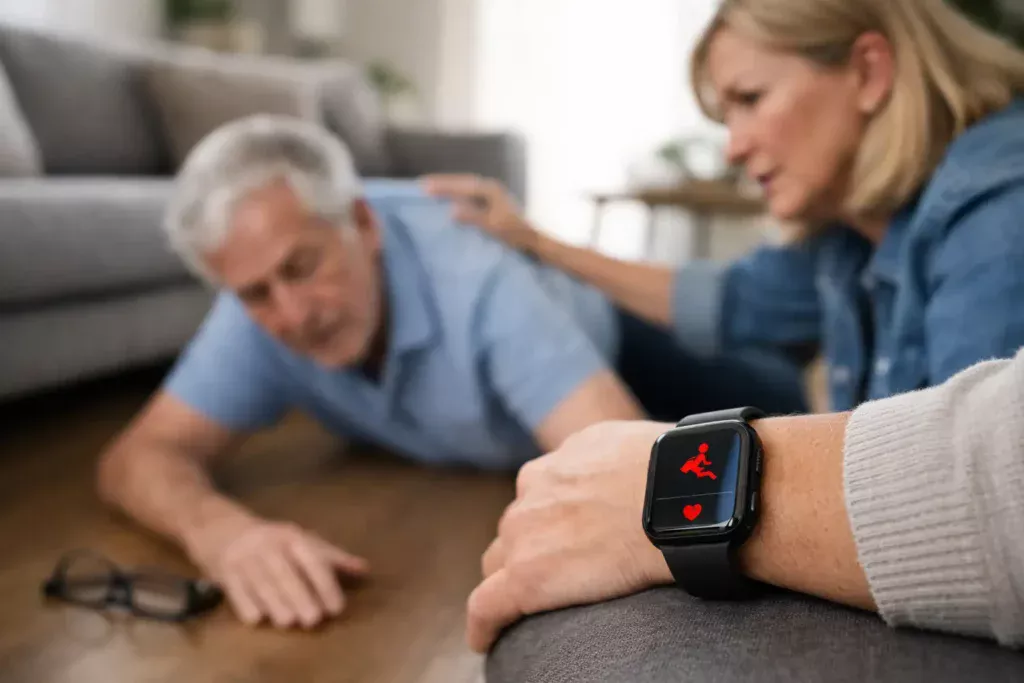
A fall is not always dramatic. It may happen when someone is getting out of bed at night, reaching for a cupboard, stepping into the shower or walking through the garden. The greatest worry is often not the fall itself, but whether the person can get help if they cannot reach a phone. Fall detection watches are designed to provide that extra layer of protection, while allowing people to continue living independently.
For families, the right device can replace a constant question – “What if something happens when I am not there?” – with practical reassurance. But not every watch or wrist-worn alarm works in the same way. The details matter, particularly for someone who may be less confident with technology, has a history of falls, or spends time alone.
A fall detection watch uses motion sensors to recognise the sudden movement and impact associated with a serious fall. If it identifies a possible fall, it can send an alert to nominated family members, carers or an emergency response service, depending on the system.
Most good systems also provide a way to call for help manually. This matters because many emergencies are not falls. Someone may feel faint, become unwell, experience chest pain, feel unsafe or simply need assistance. A manual SOS alert means help can be summoned without finding and using a phone.
Some devices add scheduled check-ins. At an agreed time, the wearer confirms that they are OK. If they do not respond, their contacts can be alerted. This is particularly helpful when a person is at risk of becoming unwell or confused, even if they are unlikely to have a severe fall.
The aim is not to monitor every movement or take away independence. It is to make sure that, if something serious happens, somebody knows.
Automatic fall detection is a valuable safety feature, but it has limits. A device cannot reliably identify every type of fall. A slow slide from a chair, a gradual collapse or a fall cushioned by furniture may not create the movement pattern needed to trigger an alert. Equally, a sharp movement during everyday activity could occasionally be mistaken for a fall.
That is why manual help and check-ins are so useful alongside automatic detection. Together, they cover more real-life situations than fall detection alone.
It is also worth asking what happens after a fall is detected. Does the device give the wearer time to cancel an alert if they are unhurt? Who receives the alert? Can they see the information they need to act quickly? A feature only provides reassurance if there is a clear plan for responding to it.
Many people first look for a device to use at home. That makes sense: home is where slips, trips and bathroom falls commonly happen. Yet coverage should not stop at the front door.
A reliable home system should work around the home and garden, rather than only in the same room as a phone. For someone who keeps their mobile upstairs, leaves it charging in the kitchen or does not always carry it from room to room, this can make a real difference. A dedicated home base station can provide dependable coverage without asking the wearer to change their routine.
Outside the home, many fall detection watches depend on a smartphone connection. This can work well for trips to the shops, appointments, visiting friends or going on holiday, provided the phone is nearby, switched on and connected. The wearer should not need to open an app or remember a complicated sequence after an emergency. In a stressful moment, simplicity is a safety feature.
Before choosing a device, think through an ordinary week. Is the person often in the garden? Do they walk the dog, travel independently or stay with family? Do they regularly leave their phone in another room? The best choice is the one that fits those habits, rather than one that only looks good on a specification sheet.
Protection only works when the device is on the wrist. A watch that is taken off to charge, removed for a shower or left on a bedside table cannot help during the moments when it is needed.
For many people, the most practical option is a waterproof wristband that can stay on in bed and in the shower. Night-time and bathroom trips are common times for falls, so continuous wear is more than a convenience. It closes a gap in protection.
Battery life deserves the same attention. Smartwatch-style devices may need charging every day or every few days. That may suit someone comfortable with charging technology, but it can be a poor fit for a person who forgets, finds small cables difficult or worries about pressing the wrong button. A device designed to operate for a full year without recharging removes one more task from daily life.
Comfort, a clear fastening and suitability for people with a pacemaker should also be checked. The right device should feel like part of a normal routine, not like a piece of medical equipment that has to be managed.
A fall alarm is most useful when the people receiving alerts already know what to do. Choose contacts who are likely to notice an alert and are able to respond. That could be an adult child, neighbour, friend or carer. It is sensible to include more than one person, especially if someone works shifts, travels or may be unavailable.
Talk through the response in advance. If an alert arrives, should they call the wearer first? Do they have a key or key safe access if nobody answers? Who lives nearest? At what point should emergency services be called? These conversations can feel uncomfortable, but they make a real emergency less confusing.
Check that contact details are correct and that everyone understands how alerts will arrive. Then test the system together. A short test gives the wearer confidence in the SOS action and lets family members see the alert process for themselves.
A smartwatch can be useful for someone who enjoys technology, regularly uses a smartphone and is happy to charge a device often. It may offer calls, messages, activity tracking and fall detection in one place. However, those extras can also mean more settings, more notifications and more opportunities for the device to be off the wrist or out of power.
A dedicated personal alarm is usually a better fit when the priority is dependable, low-fuss safety. It is designed around the actions that matter most: asking for help, confirming that everything is OK and automatically raising concern after a severe fall.
Acticheck, for example, combines manual SOS alerts, scheduled “I’m OK” check-ins and automatic severe-fall detection in a waterproof wristband. A home base station supports coverage around the home and garden, while phone apps can extend protection when the wearer is out, with their phone nearby. The wristband is designed to be worn day and night and runs for a year without charging.
There is no single right answer for every household. A confident smartphone user may value a multi-purpose watch. Someone who wants to put it on and forget about it will often benefit more from a dedicated safety device.
Look beyond the phrase “fall detection”. Ask whether there is a manual SOS option, whether the device works in the shower and garden, and how often it must be charged. Find out whether it needs a phone at home, outside the home or both. Check who receives alerts and whether there is an ongoing service cost.
It is also sensible to consider the wearer’s preferences. Will they accept the design? Can they use the button comfortably? Will they understand the check-in prompt? The most advanced system is not necessarily the safest if it is left in a drawer.
Independence does not mean facing every risk alone. The right fall detection watch can help a person continue with the familiar routines they value, while giving you and your family a practical way to be there when it matters most.