

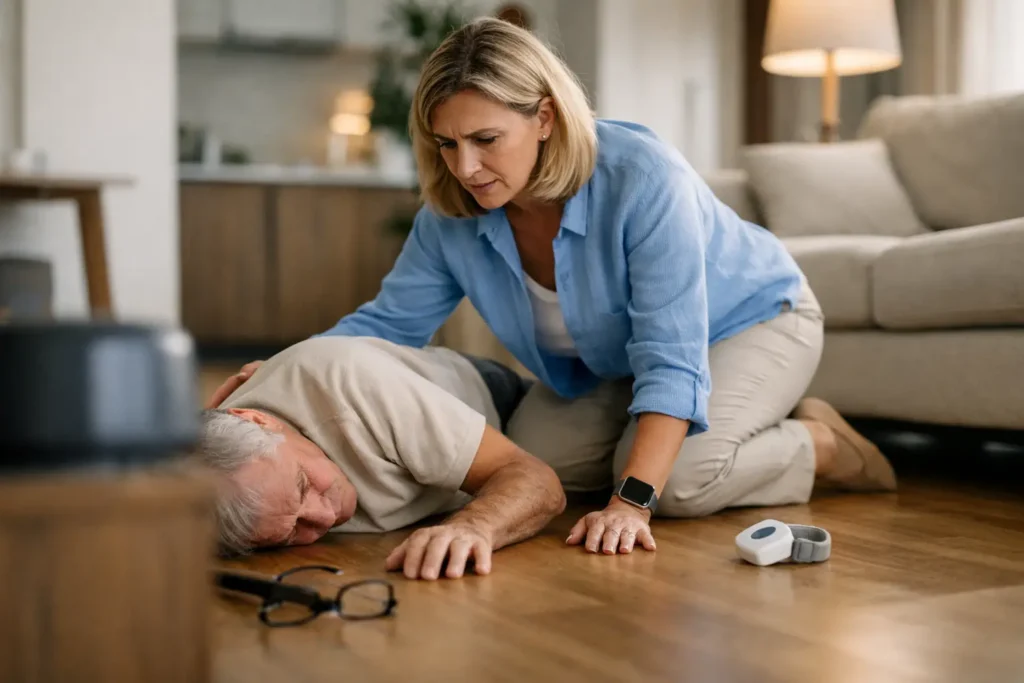
A fall can become far more serious when nobody knows it has happened. The key to how to prevent undiscovered falls is not simply trying to remove every possible risk. It is making sure that, if a fall or sudden illness does happen, help can be alerted quickly – without leaving someone to struggle alone.
For an older person living independently, that protection should fit around ordinary life. Getting up at night, showering, making tea, putting the bins out or spending time in the garden should not mean choosing between independence and safety. For families, a sensible plan can replace the worry of wondering whether a missed call means a busy afternoon or an emergency.
The highest-risk places are often the most private ones: the bathroom, bedroom, stairs, kitchen and garden. A person may be alone, may not have a phone within reach, or may feel embarrassed about calling for help. Falls also happen at times when routine contact is less likely, such as overnight or early in the morning.
Walk through the home at the time of day it is normally used. Look at the route from bed to bathroom in low light, the path to the front door, and the journey into the garden. Ask practical questions: Is there enough light? Is anything loose underfoot? Would there be something sturdy to hold if balance went? Could someone call for help from the floor?
Common hazards are worth dealing with promptly. Secure trailing leads, remove loose rugs or use non-slip backing, clear stairs and hallways, and make sure frequently used items are easy to reach. In the bathroom, a non-slip mat, grab rails and a stable shower seat can make a meaningful difference. Outdoors, repair uneven paving where possible and keep paths clear of wet leaves, moss and garden tools.
These changes reduce risk, but they cannot guarantee that a fall will never happen. Illness, dizziness, medication changes and a simple misstep can affect anyone. That is why the next part of the plan matters just as much.
A mobile phone is useful, but it is not always enough. It may be charging in another room, dropped during a fall, out of battery or impossible to use if the person is confused, injured or unable to move. A safety plan needs a simple alert method that stays with the wearer, including in the shower and in bed.
A wearable personal alarm can provide that extra layer of protection. The most practical designs allow the wearer to press or squeeze a clear SOS control to alert nominated family members, friends or carers. The people receiving the alert should know what to do: call the wearer first, assess the situation, then contact neighbours, relatives or emergency services where needed.
Choose a device around the person’s real routine, not just its headline features. If they dislike charging electronics, a wristband that needs frequent charging may end up in a drawer. If they shower independently, it must be suitable for water exposure. If they spend time in the garden or go out locally, coverage should not stop at the front door.
Acticheck combines a squeeze-to-alert wristband with scheduled check-ins and severe fall detection, helping provide protection at home, in the garden and when the wearer is out with their mobile phone nearby. Its wristband is designed to be worn day and night, including in the shower, and has a battery life of up to a year. The benefit is straightforward: help is at hand without asking someone to remember another daily task.
Automatic fall detection can be valuable, particularly when somebody may be unconscious or unable to press an alarm. But it should support, not replace, a manual alert and a clear check-in routine. Not every fall has the same movement pattern, and no technology can identify every incident perfectly.
A person may slide slowly to the floor, collapse because they feel unwell, or be unable to stand after an injury without triggering an automatic alert. A manual SOS option gives them a direct way to ask for help. A scheduled “I’m OK” check adds reassurance when there has been no alarm at all.
Regular check-ins are one of the most effective ways to spot a problem that has not been reported. They work especially well for people who value their privacy and do not want family ringing repeatedly throughout the day.
Agree on a routine that feels reasonable. This might be one morning check-in, or an additional evening check for someone who is less steady after dark. The purpose is not to test someone or take away their freedom. It is to create a prompt for action if they do not respond as expected.
Make the plan specific. Decide who receives a missed check-in alert, who calls first, and who has a spare key or can reach the home quickly. If relatives live far away, a trusted neighbour may be the right first contact. If there is no nearby contact, make sure everybody understands when to call emergency services rather than waiting for a reply.
It is also wise to review the routine after a change in health. A new medication, recent hospital stay, worsening mobility or a previous fall may mean more frequent check-ins are appropriate for a while. The right level of support depends on the person, their home and who is available nearby.
Falls are not always caused by a hazard in the home. Changes in strength, balance, eyesight, hearing or blood pressure can all contribute. Encourage the person to mention dizziness, blackouts, new weakness, painful joints or repeated near-falls to their GP, pharmacist or relevant healthcare professional. Medication side effects and interactions can sometimes be part of the picture.
Simple daily habits can help too. Good lighting, well-fitting shoes with non-slip soles, regular drinks and taking time when standing up are practical starting points. Rushing to answer the door or telephone is a common source of risk, so it can help to keep a chair nearby or accept that some calls can wait.
If mobility is becoming less certain, professional advice can be useful. An occupational therapist or physiotherapist may suggest exercises, equipment or home adaptations suited to the individual’s needs. The goal is not to wrap someone in cotton wool. It is to make ordinary movement feel safer and more confident.
A fall-response plan prevents panic for both the wearer and their family. Talk through it before it is needed. If someone falls and is conscious, they should use their alarm or mobile phone if they can, stay as warm and comfortable as possible, and avoid trying to get up quickly if they are hurt, dizzy or unsure what caused the fall.
If there is severe pain, a suspected head injury, chest pain, difficulty breathing, weakness on one side, loss of consciousness or concern about a broken bone, emergency help may be needed immediately. Family members should not assume that a person is fine simply because they answer the phone. Ask where they are, whether they can move, whether they hit their head, and whether they can safely unlock the door.
Keep key information easy to find. A list of medications, health conditions, emergency contacts and any access instructions can save valuable time. A visible note is not right for everyone, but a shared plan held by trusted relatives or carers is often helpful.
Whatever alert method you choose, test it together. Confirm that alerts reach the right people, that contact details are current and that the wearer can operate it comfortably. Practise the simple action needed to request help, then make sure the person understands what will happen next.
Repeat this after changing mobile phones, moving home, adding a new family contact or changing the daily routine. Technology is most reassuring when it is familiar, worn consistently and backed by people who are ready to respond.
Preventing undiscovered falls is ultimately about preserving choice. With a safer home, a dependable way to call for help and a plan that people trust, someone can continue living life on their own terms – while you and your family have reassurance that they will not face an emergency alone.