
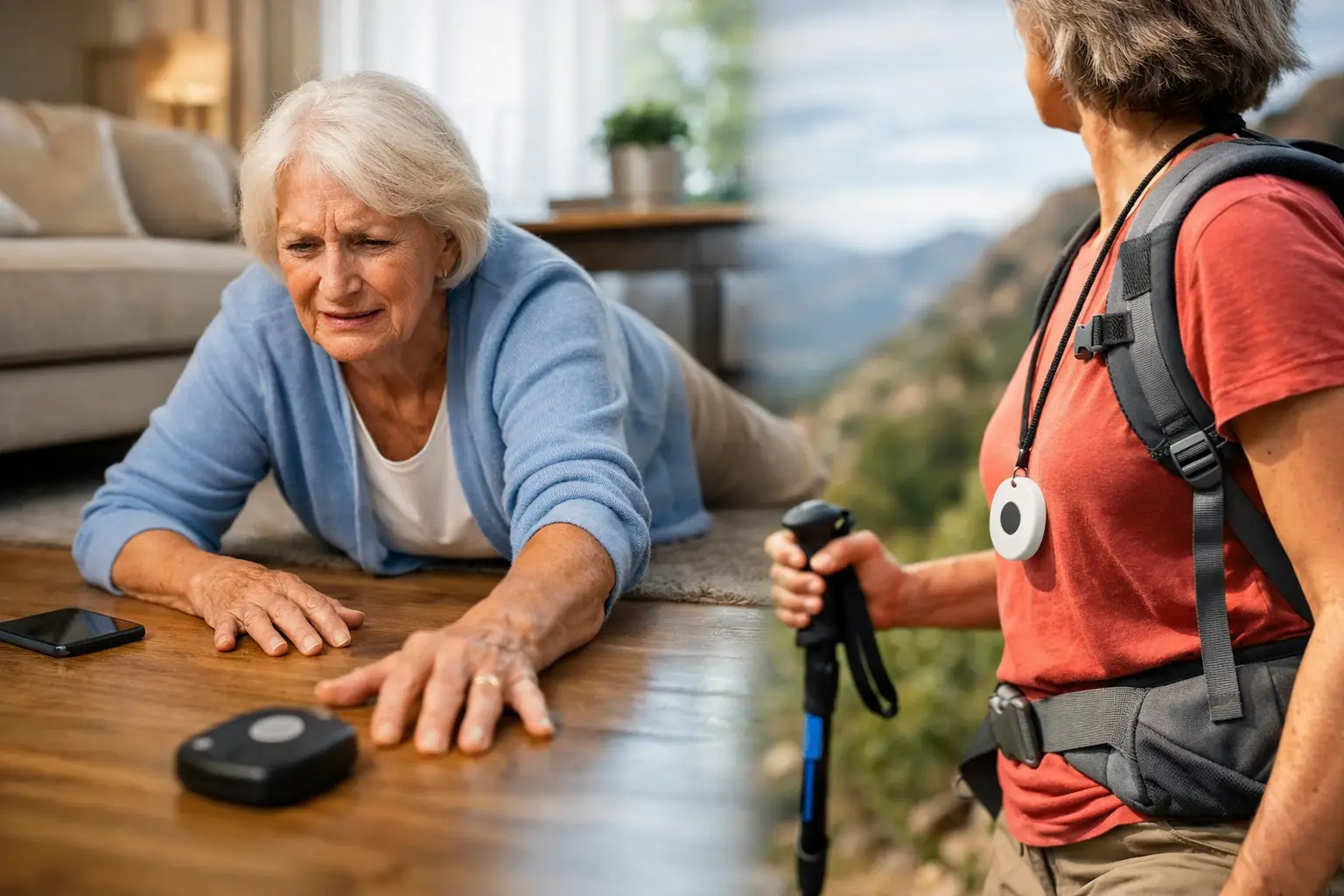
A fall can happen in seconds: on the bathroom floor, while reaching for something in the garden, or on the way home from the shops. The question, “how does a fall alarm work?”, is really about what happens next if the person who has fallen cannot reach a phone or call out. A good personal alarm makes sure that help can be requested or alerted quickly, without taking away the confidence to carry on living independently.
What a fall alarm is designed to do
A fall alarm is a wearable device, usually worn on the wrist or around the neck, that provides a way to raise the alarm after a fall, sudden illness or moment of distress. Depending on the system, it may alert relatives, friends, carers or a professional monitoring centre.
Some alarms rely on the wearer pressing a button. Others use built-in sensors to recognise the movement pattern of a serious fall and send an alert automatically. The most useful arrangements often combine both approaches, because not every emergency involves falling and not every fall can be detected perfectly by technology.
The aim is simple: if something goes wrong, someone who can help should know about it promptly. For the wearer, that can mean more freedom to stay at home, move around the garden and continue everyday routines. For family, it can remove some of the worry that an emergency may go unnoticed for hours.
How does a fall alarm work in an emergency?
Most personal alarm systems follow the same basic sequence. A person triggers an alert, either deliberately or automatically. The device sends a signal to a connected base station or mobile phone. The system then contacts the people chosen to respond, so they can call, visit, arrange help or contact the emergency services where needed.
Exactly how this is delivered varies. A traditional home alarm may communicate through a base unit in the property, giving coverage around the house and, often, the garden. A mobile-enabled alarm can use a smartphone connection or its own mobile network connection to provide protection further afield. Some services send alerts to nominated family members; others are connected to a 24-hour monitoring centre.
Before choosing an alarm, it is worth checking who receives an alert, how they receive it and what happens if the first person does not respond. The right answer depends on your family network, where the wearer spends their time and whether professional monitoring is wanted.
Raising an alert manually
A manual SOS function is essential. A fall detector may not recognise every incident, but a person might still be able to press or squeeze their alarm after a dizzy spell, chest pain, a frightening encounter or a fall that does not trigger the sensor.
The action should be easy to remember and possible with limited dexterity. Once activated, the alarm sends a request for help through its connected system. Relatives or carers can then see that action is needed, rather than waiting to notice that a routine call has been missed.
This is why a wearable needs to be worn consistently. An alarm left charging upstairs, sitting on a bedside table or hanging by the front door cannot help during a bathroom fall. Comfort, waterproofing and battery life are practical safety features, not simply product details.
Detecting a serious fall automatically
Automatic fall detection uses motion sensors, commonly an accelerometer and gyroscope, to look for a pattern associated with a heavy fall. This can include a sudden downward movement, an impact and a change in the wearer’s position afterwards.
When the device identifies a possible severe fall, it may give the wearer a short opportunity to cancel the alert. This matters because everyday movements can sometimes look dramatic to a sensor. Sitting down heavily, dropping the wrist onto a surface or taking part in vigorous activity could otherwise create a false alarm.
If the alert is not cancelled, the system notifies the chosen responders. A family member may receive a message or notification and can make contact straight away. Where a monitoring centre is involved, an operator may attempt to speak to the wearer and arrange an appropriate response.
Automatic detection is valuable when somebody is unconscious, confused, in pain or simply unable to use the button. But it should never be treated as a guarantee that every fall will be identified. A slow slide from a chair, for example, may not have the sharp impact pattern that a sensor expects. Manual help buttons and regular check-ins provide important extra layers of protection.
Using regular “I’m OK” check-ins
Some systems also ask the wearer to confirm that they are well at agreed times. If they do not respond, the system alerts family or carers to check what is happening.
This feature can be especially reassuring for someone who lives alone. It can highlight concerns that are not a conventional fall, such as feeling unwell in bed, becoming disorientated, or being unable to reach the alarm after an incident. It also provides a gentle routine without requiring relatives to make repeated calls throughout the day.
Where a fall alarm works matters as much as how it works
A home-only alarm may be a sensible choice for someone who rarely goes out alone. However, falls do not only happen in the sitting room. They can happen in the garden, on the driveway, at a friend’s house or while walking to the local café.
For home use, a base station can provide dependable coverage without depending on the wearer to operate a smartphone. For protection away from home, some alarms work alongside an Android or iPhone app. The phone needs to be nearby and connected, so it is important to understand the practical limits before relying on it for outings.
Acticheck combines a home base station with smartphone app support, so the wristband can raise alerts at home and away when the connected phone is nearby. Its severe-fall detection, squeeze-to-alert function and scheduled “I’m OK” check-ins are designed to cover different types of emergency, rather than relying on one trigger alone.
The everyday details make a difference here. A waterproof wristband can stay on in the shower, where slips are common. One that is comfortable enough to wear in bed remains available during the night. A battery that lasts for a year avoids the risk of a device being forgotten on charge just when it is needed.
What happens after an alert is sent?
An alert only works well when everyone understands their role. Family members should know whether they will receive a phone call, app notification, text message or another form of prompt. They should agree who will respond first and what they will do if they cannot make contact with the wearer.
For many families, a sensible response is to call the person straight away, then contact a nearby relative, neighbour or carer if there is no answer. If there is reason to believe someone is seriously injured or in immediate danger, call 999. A personal alarm is a way to get help moving sooner; it does not replace emergency medical advice or urgent treatment.
It is also wise to review contact details occasionally. A new phone number, a relative going on holiday or a change in care arrangements can leave an otherwise dependable system without the right people ready to respond.
Choosing a fall alarm that fits real life
The best alarm is not necessarily the one with the longest list of technical features. It is the one a person will genuinely wear, understand and trust. Consider their daily routine: Do they shower independently? Do they sleep with the alarm on? Do they use the garden? Do they go out with a mobile phone? Would they remember to charge a device every few days?
Ask whether the alarm has a simple manual way to call for help, whether it offers automatic fall detection and how it handles false alerts. Check its range at home, its protection away from home, its battery requirements and whether it is suitable for the wearer’s medical circumstances. A straightforward test with the family contacts after set-up can make everyone more confident.
No device can remove every risk from independent living. What it can do is make sure a difficult moment is less likely to become a long, lonely wait for help. The right fall alarm should quietly fit into everyday life, leaving the wearer free to get on with theirs while you and your family know help is at hand.