

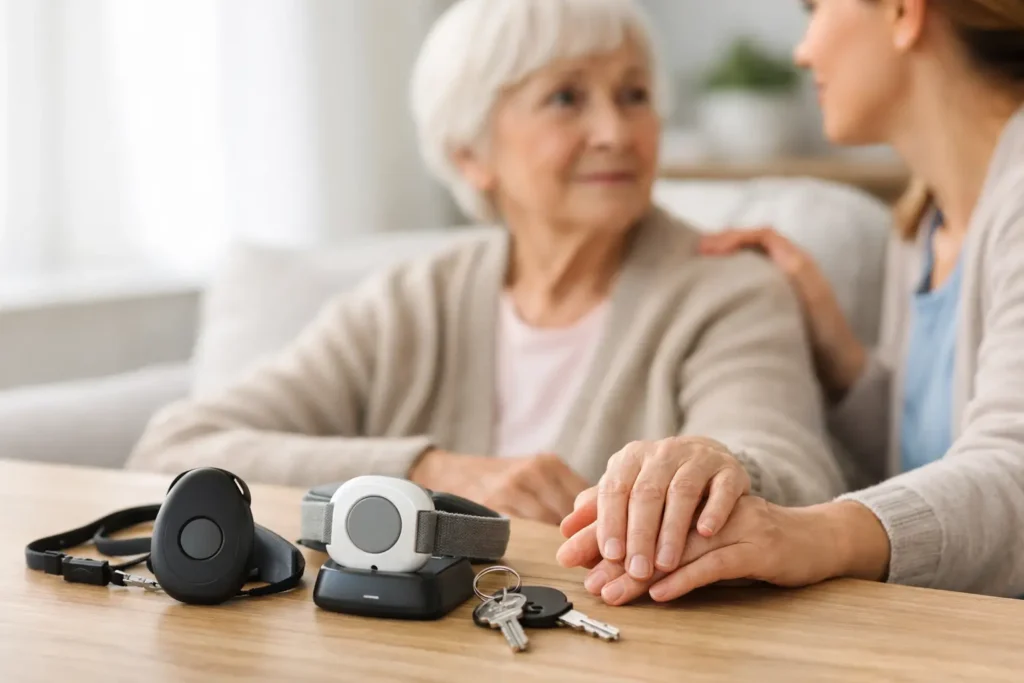
A fall in the bathroom, a moment of confusion in the garden or feeling suddenly unwell can become far more worrying when someone lives alone with dementia. A personal alarm for dementia patients should make it easier to get help in those moments, without adding another complicated routine to an already demanding day.
The right choice is not simply the alarm with the longest feature list. It is the one the person is genuinely comfortable wearing, can use with confidence and that gives you and your family a clear plan for what happens if they need help.
Dementia affects people differently and the changes can develop gradually. Someone may manage familiar daily routines well but struggle when something unexpected happens. They may be unable to reach a phone after a fall, forget where it is, or feel distressed and not know who to call.
A wearable alarm keeps a way of raising an alert close at hand. This can support independence rather than take it away. The wearer can continue to move around their home, spend time in the garden, have a shower or go about familiar activities, while knowing help is available if something goes wrong.
For relatives and carers, the value is often reassurance. You cannot be there every minute, and most people do not want to be watched every minute either. A well-chosen alarm creates a sensible safety net while respecting privacy, routine and dignity.
It is not a replacement for care, regular contact or a risk assessment where one is needed. Nor can an alarm prevent every accident. It can, however, shorten the time between an emergency happening and someone being told about it.
The simplest device is usually the strongest option. If using it requires remembering several steps, opening an app or charging it every few days, it may not be dependable in real life. Look for an alarm that fits naturally into the wearer’s routine.
A clear manual SOS action matters. In a frightening moment, a person should not need to navigate a screen, remember a code or find a handset. A wearable design with obvious buttons can be easier to understand and practise together.
Try the action before deciding. Can the person squeeze or press it comfortably? Will they recognise what it is for? Some people may benefit from a calm, repeated reminder: “If you are hurt, worried or need me, use your wristband.” Keep the explanation short and consistent.
An alarm only helps when it is with the person. Pendants can work well for some people, but others remove them at night, before washing or because the cord feels uncomfortable. A wrist-worn alarm may feel more like an everyday watch or bracelet and be less likely to be forgotten.
Choose something comfortable enough for bed and shower use where possible. Bathrooms and bedrooms are common places for falls, and taking an alarm off to wash creates an avoidable gap in protection. Waterproofing is not a minor extra when daily wear is the aim.
For many families, charging is the feature that quietly causes failure. A device can be excellent in theory but offer no protection when it is sitting uncharged in a drawer. Dementia can make remembering charging schedules difficult, and relatives may not visit often enough to manage this task.
A long-life battery reduces that burden. For example, Acticheck’s wristband works for a full year without recharging, helping protection remain part of the routine rather than another job to remember.
Some alarms work only within a limited distance of a base unit. That may suit a person who rarely leaves their home, but check whether the signal covers the whole property, including upstairs rooms and the garden.
If the person still visits friends, walks locally or travels with family, consider protection beyond the front door as well. This does not mean they must learn to use a smartphone. Systems can use a mobile phone connection in the background, provided the mobile phone is nearby. The important question is practical: where does this person spend their time, and will the alarm work there?
A single SOS button is useful, but dementia can affect whether a person recognises an emergency or remembers what to do. A personal alarm with more than one way to identify concern can provide broader reassurance.
First, there is the manual alert. This is for the moments when the wearer knows they need help – perhaps they have slipped, feel dizzy, are in pain or feel frightened. It gives them a direct way to call for support.
Second, scheduled “I’m OK” check-ins can help families notice when an expected response does not arrive. These need thoughtful set-up. For someone in the earlier stages of dementia, a regular prompt may be reassuring and easy to manage. For another person, it may cause confusion or anxiety. Begin with a simple schedule and review whether it remains helpful.
Third, automatic severe-fall detection can raise concern when the wearer is unable to act for themselves. This is particularly valuable after a serious fall where they cannot reach a phone or activate the alarm. It should be understood as an extra layer, not a guarantee that every stumble will be detected. Falls vary, and sensible precautions at home still matter.
Together, these options cover different situations: when the wearer asks for help, when they do not complete an expected check-in, and when a severe fall may stop them acting at all.
The best alarm arrangement reflects the person’s abilities, habits and support network. Involve them in the choice wherever they can take part. Ask whether they prefer a wristband or pendant, which wrist feels comfortable, and who they would want contacted if there is an alert.
Make sure the nominated family members, friends or carers understand their role. They should know how alerts are received, what information they will have and what they are expected to do. A neighbour with a spare key may be able to check quickly; a relative farther away may need to call them or contact emergency services. Agreeing this in advance avoids confusion when time matters.
It is also wise to test the system when everyone is calm. Practise the SOS action, check that the home equipment is placed correctly, and make sure mobile phones used outside the home are compatible and usually carried. Repeat this gently from time to time, especially after any change in health, medication, mobility or living arrangements.
Do not be distracted by features that do not match the person’s life. Focus on the everyday details that determine whether an alarm will be used and trusted:
Price and ongoing service costs matter too, but they should be judged alongside reliability and fit. A cheaper device that is removed for the shower, is difficult to operate or is regularly flat may offer less real protection than a simpler option that stays on.
A conversation about alarms can feel sensitive. Someone may worry that their family sees them as incapable, or fear that accepting support means losing control. The way you introduce it makes a difference.
Frame it as a practical tool for staying independent. An alarm does not have to mean constant supervision. It can mean having the confidence to make a cup of tea, spend time in the garden or stay at home in familiar surroundings, with help at hand if it is needed.
Start early where you can, while the person can learn the routine and share their preferences. Then keep reviewing it with kindness. As dementia changes, the most helpful solution may change too. The aim is not to remove every risk from life, but to make sure that, whatever happens, wherever it happens and whenever it happens, no one is left facing it alone.