

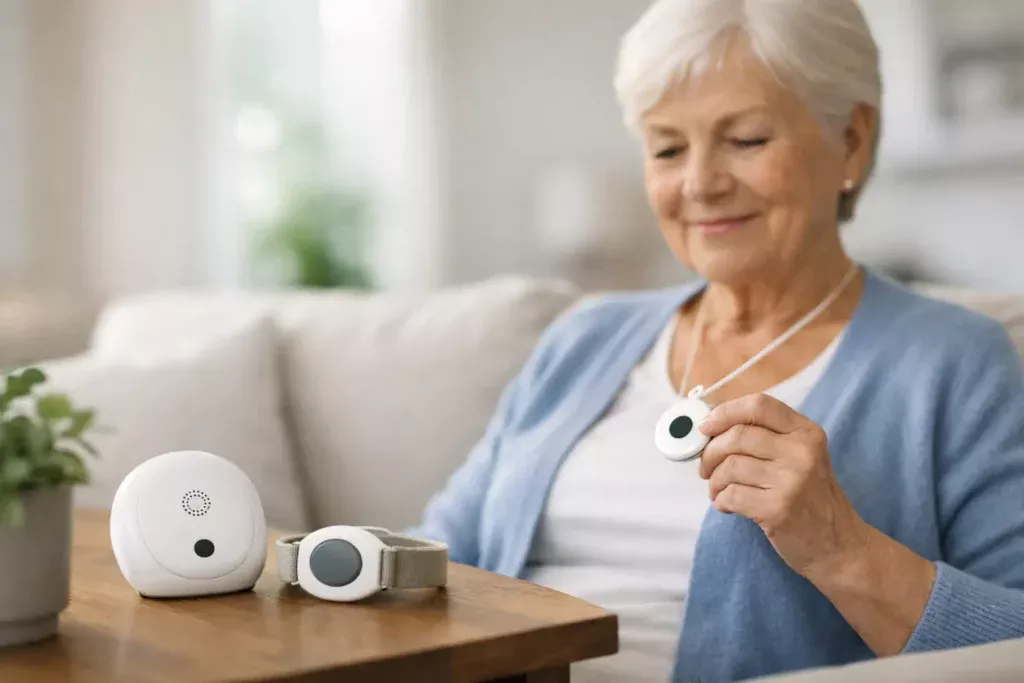
A personal alarm is only useful when it is being worn. That is why an elderly alarm without charging can make such a meaningful difference for someone living independently. If a wristband is taken off overnight, left beside a charger or put aside before a shower, there may be a gap at exactly the moment help is needed.
For many families, charging is not a small inconvenience. It is another task to remember, another cable to find and another reason a loved one may decide not to wear their alarm. The right alarm should fit around everyday life, rather than asking everyday life to fit around it.
People do not plan emergencies. A fall can happen on the way to the bathroom at night, while reaching for a towel after a shower, or in the garden while bringing in washing. Sudden illness, dizziness and distress can happen just as unexpectedly.
A rechargeable device may offer a reasonable battery life, but it still needs a routine. If that routine is missed, the wearer might have to choose between going without their alarm or waiting while it charges. Neither is reassuring, particularly for a person who is unsteady on their feet, lives alone or has a condition that can cause a sudden loss of confidence or mobility.
This is not a criticism of every rechargeable alarm. For someone who is comfortable with technology, has regular support at home and reliably charges a device each evening, one may be suitable. But where simplicity and continuous protection matter most, a long-life battery removes a common point of failure.
The aim is not to add another responsibility. It is to make safety part of the routine: put the wristband on, keep it on and know help is at hand.
A battery that lasts a long time is valuable, but it is only one part of a dependable personal alarm. Before choosing, consider what happens if the wearer needs help, where they spend their time and whether the system will still work when they cannot explain what is wrong.
The best safety feature is of little use in a drawer. Look for a wrist-worn alarm that is comfortable, discreet and designed to be worn in bed. It should also be waterproof, so there is no need to remove it for handwashing, bathing or showering.
Bathrooms are a particular concern because wet floors and hard surfaces increase the risk of injury. Removing an alarm before entering the shower creates an avoidable gap. A wearable that can stay on the wrist makes the choice simpler.
If the person has a pacemaker, check that the device is confirmed as pacemaker-safe. It is also worth considering how easily the fastening can be managed, especially for someone with arthritis, limited grip or reduced dexterity.
In an emergency, instructions need to be simple. A wearer should be able to call for help without finding a phone, reading a screen or remembering several steps. An SOS action that involves squeezing buttons on the wristband can be easier to use when someone is frightened, in pain or on the floor.
It also helps if the alarm can alert more than one trusted person. Family, friends and carers can then agree who is most likely to respond, rather than leaving all responsibility with one person. The important question is what happens after an alert: who receives it, what information they receive and how quickly they can act.
Not every emergency allows a person to press a button. Someone may be confused, too weak to move, unconscious or simply unable to reach their wrist properly after a fall.
Scheduled ‘I’m OK’ check-ins provide another layer of reassurance. At an agreed time, the wearer confirms that they are alright. If they do not respond, their chosen contacts can be notified to check in. This can be especially helpful for an older person who values privacy and independence but whose family worries when a usual call goes unanswered.
Automatic fall detection can add further support by looking for patterns linked to a severe fall. However, it should never be treated as a guarantee that every fall will be detected. Some falls are slow, cushioned or unusual in movement, while a sudden movement can occasionally need checking. A reliable system combines fall detection with a manual SOS and regular check-ins, rather than relying on one feature alone.
Many personal alarms work only within a limited distance of a pendant unit or telephone. That may suit somebody who rarely leaves a single room, but it can be restrictive for anyone who enjoys their garden, visits neighbours or goes to the shops.
At home, a dedicated base station can give dependable coverage around the house and garden without relying on the wearer to operate a mobile phone. Away from home, an alarm should be able to extend protection through a smartphone connection, provided the phone is nearby. The wearer should not have to open an app or navigate a menu when they need assistance.
Think honestly about a normal week. Does your loved one take the dog into the garden, collect a prescription, attend a lunch club or travel to stay with family? Protection should support those ordinary freedoms, not quietly discourage them.
‘No charging’ does not mean ‘no maintenance forever’. Every battery-powered safety device will eventually need its battery replaced or its wristband renewed. The difference is that a full-year battery avoids the daily or weekly charging cycle that is so easily forgotten.
Ask how the system lets you know when its battery is nearing the end of its life. Clear advance warning gives the wearer and family time to arrange a replacement without losing protection. Also ask whether the supplier handles replacement simply, and whether there are ongoing service costs for alerts, monitoring or mobile coverage.
It is sensible to test any alarm together after it arrives. Make sure the wearer can perform the SOS action comfortably, check that the right contacts receive the alert and decide what each person should do. A short family conversation at the start can prevent uncertainty later.
The right alarm depends on the person, not just their age. Someone recovering from a hip operation may need close reassurance for a few months. A person with Parkinson’s, epilepsy, heart concerns or a history of falls may need continuing support. Others are physically well but live alone and want a reliable way to call for help if something unexpected happens.
Start with the everyday risks, not the technical specification. Ask where they are most likely to need help, whether they would remember to charge a device, and who could respond to an alert. Then check that the product can be worn in the shower and overnight, works throughout the home and garden, and supports time away from home if that matters.
It is equally important to involve the wearer in the decision. A safety alarm should feel like a practical confidence aid, not a sign that independence has been taken away. When the device is comfortable, easy to use and unobtrusive, people are more likely to accept it as part of daily life.
For families, the emotional strain often comes from the unknowns. Did Mum get up safely this morning? Has Dad had a fall but cannot reach the phone? Is someone there if they are unwell while alone?
A long-life wearable cannot remove every risk, but it can reduce the number of moments when protection depends on memory, charging or complicated technology. Acticheck’s wristband, for example, is designed to be worn day and night, including in the shower, and runs for a full year without recharging. It combines a squeeze-to-alert SOS, ‘I’m OK’ check-ins and automatic detection of severe falls.
Whatever system you choose, look for one that protects dignity as well as safety. The most reassuring alarm is often the one that a person can forget they are wearing – while you and your family know it is there whenever it is needed.