

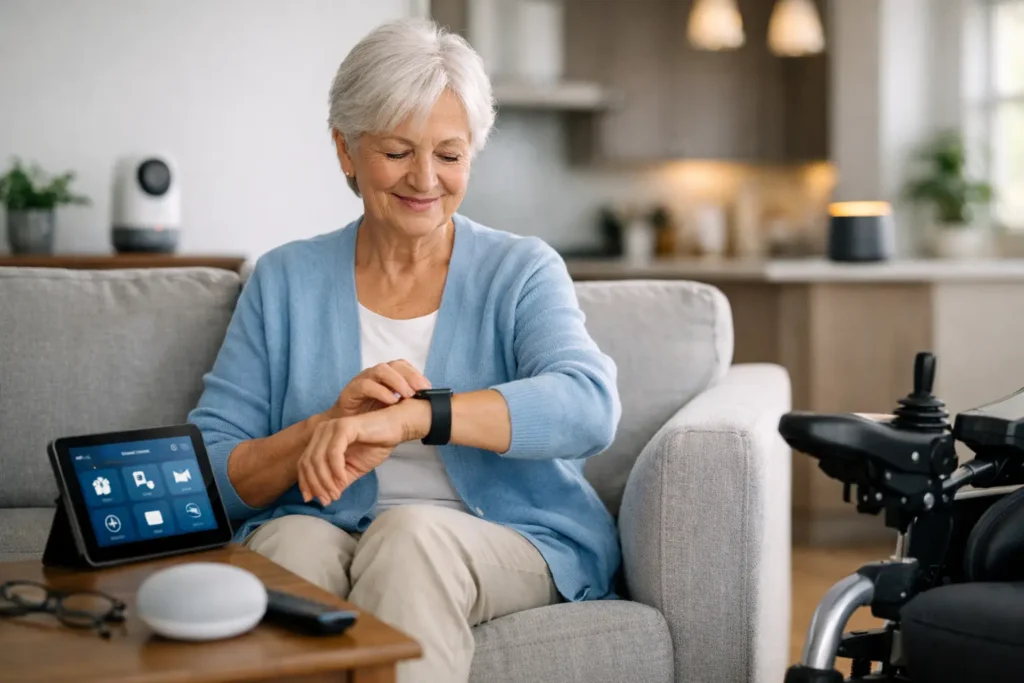
A fall in the bathroom. Sudden dizziness while making tea. A missed call that leaves family wondering whether everything is all right. These are the moments independent living technology is designed for: helping someone keep their usual routine while making sure help can be called for when it is genuinely needed.
The best technology should not make a person feel watched, managed or dependent on a complicated device. It should fit quietly into daily life, protect their dignity and give you and your family greater confidence that help is at hand.
Independent living technology is a broad term for equipment and services that help people live safely in their own home for longer. It can include personal alarms, fall detectors, medication reminders, sensors, video calling devices and monitored systems that alert family members or a response centre when something is wrong.
The right choice depends on the person and the risk. Someone who occasionally feels unsteady may need a simple way to summon help. A person with a history of falls may benefit from automatic fall detection as well as a manual alarm. For somebody living with memory problems, missed medication or an unusual change in routine may be the greater concern.
What matters is not how many features a device has. It is whether it will still be there, still be worn and still work in the moment it is needed. A device left charging in a drawer cannot help after a fall.
Many emergencies happen during ordinary activities, not dramatic ones. The shower, stairs, kitchen, bedroom and garden all bring different risks. A useful personal alarm should therefore be comfortable enough to wear throughout the day, and ideally overnight too.
Waterproofing matters because bathrooms are a common place for slips and falls. A long battery life matters because frequent charging creates another task to remember, and another opportunity for protection to be interrupted. Simple operation matters because a person may be frightened, in pain or unable to think clearly during an emergency.
For many people, the most practical design is something worn on the wrist. It is much less likely to be left on a bedside table than a pendant or a mobile phone, particularly when someone gets up in the night.
A dependable safety system does not rely on one type of alert alone. Different situations call for different forms of protection.
First, there is the manual alarm. This gives the wearer a clear action to take if they feel unwell, have fallen or need help. A simple squeeze of buttons can be easier than finding a phone, remembering a number and explaining what has happened.
Second, there are regular check-ins. Being asked to confirm “I’m OK” at an agreed time can give family reassurance without unnecessary calls throughout the day. If the check-in is missed, nominated contacts can be alerted so they can decide what to do next. This can be especially helpful where a loved one values their privacy but lives alone.
Third, there is automatic fall detection. No fall detector can identify every fall, and it should never be treated as a reason not to press the alarm if someone can do so. However, it provides an extra layer of support if a severe fall leaves a person unable to call for help themselves.
Together, these options recognise a simple truth: an emergency does not always look the same. The person may be able to ask for help, may forget to check in, or may be unable to move after a fall.
A traditional home alarm may work through a base unit inside the property. This can provide dependable coverage around the house and, depending on the system, into the garden. It is a sensible starting point for someone who spends most of their time at home.
But independence also means putting the bins out, visiting a neighbour, walking to the local shop or going on holiday. If protection stops at the front door, families need to be clear about that before choosing a system.
Some wearable alarms can connect through a smartphone when the wearer is away from home. This can extend safety beyond the base station, provided the phone is nearby, switched on and has a suitable connection. It is a valuable option, but it is not identical to standalone mobile coverage. Knowing the difference helps you choose with confidence rather than assuming a device works everywhere in every circumstance.
Acticheck is designed around this everyday reality, combining a home base station with smartphone connection away from home, so the wearer does not need to operate an app during an emergency. The wristband can be worn in bed and in the shower, and its battery lasts for a full year without recharging.
It can be tempting to choose the device with the longest feature list. Start instead with the questions that reveal whether it will work for the individual person.
Think about where they spend their time. Do they need reassurance only at home, or do they regularly go into the garden, visit friends or travel independently? Consider what may happen in an emergency. Could they confidently use a phone, or would a straightforward wrist-worn alarm be easier? Then consider the daily routine. Will they remember to charge it, put it on in the morning and take it into the bathroom?
It is also worth agreeing who receives alerts and what they should do. One family member may be nearby but often at work. Another may live further away yet be able to make calls and organise support. Set up more than one contact where possible, and make sure everyone understands the plan. Technology provides the alert; a clear response plan turns that alert into practical help.
Before buying, check these points carefully:
There is no single best arrangement for every household. A professional monitoring service may suit someone whose family live far away or cannot always answer quickly. Alerts to relatives may feel right for a close family network that has agreed how to respond. The key is to avoid leaving responsibility vague.
Some people worry that accepting an alarm means giving up independence. The opposite can be true. Knowing there is a simple way to call for help may make it easier to keep doing familiar things with confidence: showering alone, tending the garden, sleeping in their own bed or popping out locally.
The conversation usually goes better when it begins with what the person wants to continue doing, rather than what family fear might happen. Ask what would make them feel safer without making life more difficult. Let them try the alarm action themselves. Talk through when they would use it and reassure them that pressing for help is never making a fuss.
A safety device cannot prevent every fall or illness, and it does not replace medical advice, good home lighting, suitable footwear or regular contact with others. But it can close a frightening gap: the time between something going wrong and someone knowing help is needed.
For the person wearing it, that can mean keeping control of their day. For family, it can mean fewer anxious guesses and more meaningful conversations. Whatever happens, wherever it happens, whenever it happens, the right support should feel close by.