
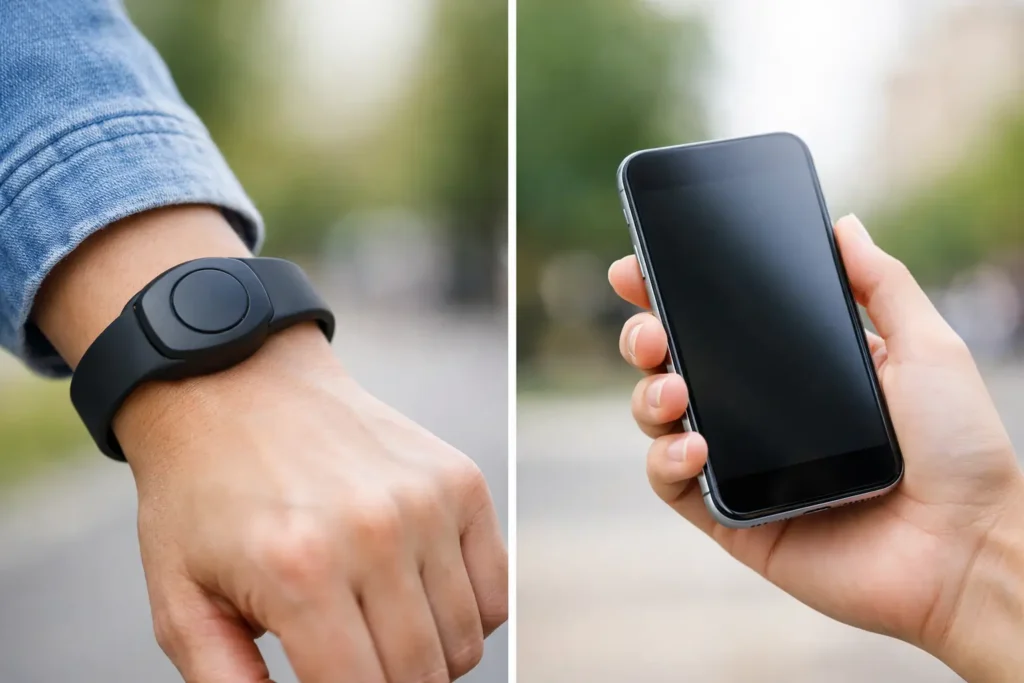
A mobile phone can be reassuring to carry, but it cannot always help when it is on the kitchen table, out of charge or simply out of reach. When comparing an SOS wristband versus mobile phone, the real question is not which device has more features. It is which one is most likely to get help started when someone is frightened, unwell or unable to move.
For people living independently, and for the family members who worry quietly in the background, that difference matters. An emergency does not wait until a phone is charged, unlocked and close enough to pick up.
SOS wristband versus mobile phone: the everyday difference
A mobile phone is a useful communication tool. It lets you call a relative, speak to a doctor’s surgery, order a taxi or contact emergency services. Many people feel comfortable with their phone and would not want to be without it.
But a phone depends on several steps going right. The person needs to have it with them, recognise that something is wrong, unlock it, find the right contact or dial a number, and be able to speak clearly. In a fall, sudden illness or moment of confusion, that can be a lot to ask.
An SOS wristband is designed for a different job: making it simple to raise an alert. It stays on the wrist, so it is there while making tea, walking to the bathroom at night or sitting in the garden. With an Acticheck wristband, the wearer squeezes the buttons to send an SOS alert to the people chosen to help. There is no screen to navigate and no number to remember.
That does not make a mobile phone unhelpful. For many households, the strongest approach is to use both. The phone remains useful for everyday contact, while the wristband provides a more dependable way to call for help when using a phone may be difficult.
Where a phone can let someone down
Most people do not deliberately leave their phone behind. It happens because daily life gets in the way. A phone may be charging upstairs, tucked into a handbag, muted overnight or left in another room while someone goes to shower.
The shower and bathroom are particularly important. Falls can happen on wet floors, and phones are not usually carried into the bathroom. A waterproof wristband can be worn in the shower, meaning protection does not have to stop for part of the day that can carry a higher risk.
Charging is another practical weakness. Smartphones need regular charging, and low battery warnings are easy to ignore. If someone has reduced dexterity, poor eyesight, memory difficulties or little confidence with technology, keeping a phone charged and ready can become another task to manage.
Then there is the question of access after a fall. A person may be conscious but unable to stand, reach a table or crawl to where their phone has landed. They may feel dizzy, be in pain or be too shaken to operate a touchscreen. In those moments, having help on the wrist is a meaningful advantage.
When a mobile phone may be enough
For an active person who always carries a charged phone, can use it confidently and has no particular risk of falls or sudden ill health, a mobile phone may be sufficient for ordinary reassurance. It can be especially helpful when travelling, shopping or meeting friends.
There are also phone safety apps and built-in emergency features. These can add value, but they still rely on the phone being nearby, powered and set up correctly. Some require the user to press side buttons in a particular sequence, unlock the device or confirm an alert before it is sent.
That may be perfectly manageable for some people. It may not be suitable for someone whose hands shake, who has arthritis, who becomes confused under pressure, or who may lose consciousness after a serious fall. The right choice depends on the person, their routine and what could realistically happen in an emergency.
Protection at home, in the garden and away
Traditional personal alarms often work only within the home. That can leave a gap when someone steps outside to put out the bins, visits a neighbour or goes away for a few days.
A wearable safety system should be considered in terms of where it works. At home, Acticheck uses a dedicated base station to provide coverage around the house and garden. This avoids relying on the wearer remembering to carry a mobile phone from room to room.
Away from home, smartphone connection can extend protection when the phone is kept nearby. The important distinction is that the wearer does not need to operate an app at the point of emergency. They still use the familiar action of squeezing the wristband buttons.
For families, this can make day trips, holidays and regular routines feel less restrictive. Independence is not about asking someone to stay indoors because they might need help. It is about putting sensible support in place so they can continue doing the things that matter to them.
An SOS button is only part of the picture
A manual SOS alert is valuable, but it assumes the wearer can activate it. A serious fall or sudden medical event may leave someone unable to press anything at all.
This is where a wristband with additional safety features can offer another level of reassurance. Acticheck combines a manual SOS action with scheduled “I’m OK” check-ins and automatic detection of severe falls. If a check-in is missed, or a severe fall is detected, the chosen contacts can be alerted.
No technology can prevent every emergency or remove the need to call 999 when urgent medical help is required. Fall detection also cannot identify every stumble or every kind of illness. However, it can reduce the risk of a person remaining undiscovered for hours after a serious incident.
That is particularly relevant for people who live alone, have a history of falls, are recovering from illness or have a condition that can affect balance, mobility or awareness. It also helps relatives who cannot be present all day but want to know there is a practical plan if something goes wrong.
The simplest device is often the one that gets worn
A safety device only helps if it is used consistently. Complicated menus, frequent charging and devices that must be taken on and off can create gaps in protection.
A wristband that is comfortable enough to wear day and night becomes part of the routine. It can be worn in bed, in the shower and during ordinary activities without needing a daily decision about whether to take it along. A full-year battery life also removes the repeated worry of charging another device.
This matters for dignity as much as safety. The best support should not make someone feel watched, dependent or burdened by technology. It should give them a straightforward way to say, “I need help”, while allowing them to keep control of their own day.
Choosing the right reassurance for your family
If you are weighing up an SOS wristband versus a mobile phone, think about the moments when a phone is least useful: at night, in the bathroom, after a fall, during confusion or when it has been left in another room. Those are the moments a wearable alarm is made for.
Ask practical questions. Would the person wear it every day? Can they use a touchscreen quickly when upset? Are they at risk of falling? Do they spend time alone? Would a missed check-in give the family useful reassurance? The answers will point towards the level of support that fits their life.
A mobile phone can keep people connected. A dependable SOS wristband can help ensure that, whatever happens, wherever it happens and whenever it happens, help is at hand.