

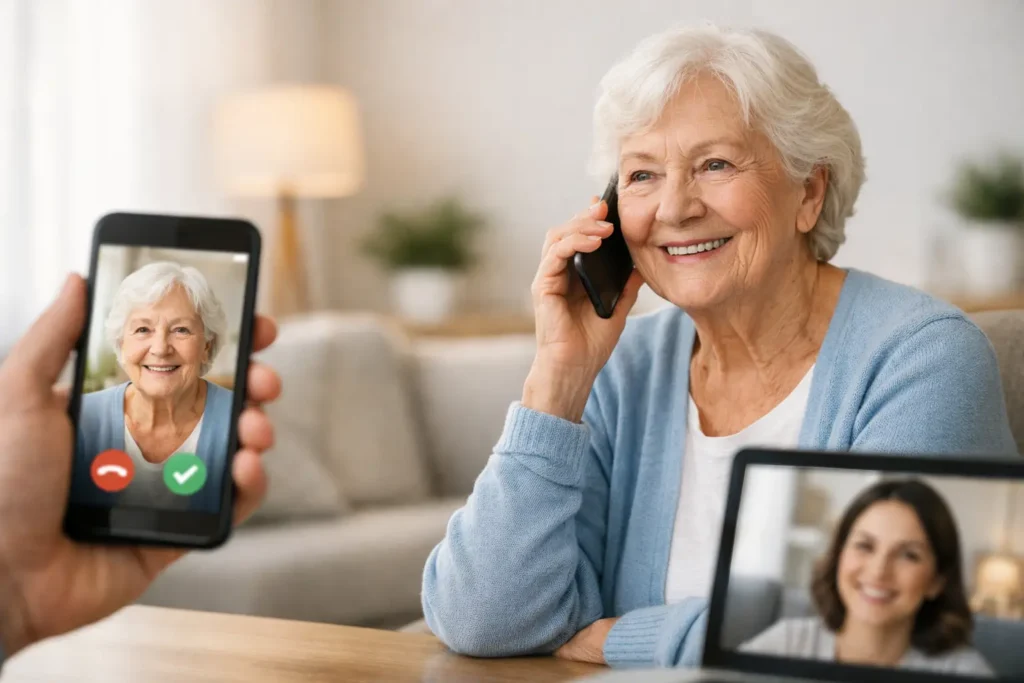
A missed call can mean very little. Perhaps Mum is in the shower, the phone is charging in another room, or she has simply gone out for lunch. But when someone usually answers and suddenly does not, uncertainty can quickly become worry. An elderly daily check in service gives you and your family a clear, agreed way to notice when reassurance is needed, without asking the person you care about to give up their independence.
For many older people, the goal is not to have someone watching over them. It is to keep living normally, in their own home and on their own terms, while knowing help can be raised if something goes wrong. A good check-in arrangement is quiet in the background until it matters.
An elderly daily check in service is a planned way for an older person to confirm they are safe at regular times. If they do not check in, a nominated relative, friend, neighbour or professional response team is alerted to follow up.
The check-in itself should be simple. It may be a phone call, a text message, a button press or an “I’m OK” confirmation on a wearable device. What matters most is what happens next. A reliable service has a clear escalation plan, so a missed check-in does not sit unnoticed in somebody’s inbox.
This approach can be particularly helpful for someone who lives alone, has recently returned home from hospital, is managing a health condition, or has had a fall in the past. It can also help families who live some distance away and cannot realistically call at the same time every day.
A daily check-in is not a diagnosis, a medical assessment or a substitute for care visits where those are needed. It is a practical safety net. It creates a prompt to act when a usual routine is broken.
The difficult part of supporting an independent relative is often not knowing whether to worry. A person may want privacy and space, while family members need confidence that they will hear if there is a problem. Regular check-ins provide a respectful middle ground.
For the wearer, confirming they are OK can become as ordinary as making a cup of tea. For family, it removes some of the pressure to repeatedly ring, message and wonder whether a missed call is significant. Everyone knows the plan before an emergency happens.
The benefit is not limited to falls. Someone may feel suddenly unwell, become confused, have a mobility problem, or be unable to reach their phone after an accident. If they cannot complete their usual check-in, the missed confirmation can be the first sign that somebody should investigate.
That said, the right frequency depends on the person. Once a day may suit someone who is active and well supported nearby. Someone recovering from illness, living with a changing condition or feeling less steady may need more frequent reassurance. The arrangement should reflect real life, rather than forcing a rigid routine that becomes frustrating to follow.
A kind daily call from family can be valuable, but it relies on somebody being available and remembering every day. Holidays, work commitments, poor mobile signal and simple human error can interrupt even the best intentions. It also places responsibility on one person, which can become exhausting over time.
A technology-enabled check-in service can share that responsibility. It can send reminders, record confirmations and alert more than one trusted contact if a check-in is missed. This does not replace family contact. It makes the safety part more dependable, leaving calls and visits to be about conversation rather than constant checking.
When comparing options, look beyond the reminder itself. Ask how the person confirms they are OK, who is notified if they do not, how quickly notification happens, and what relatives are expected to do. A service is only as useful as its response plan.
It is also worth considering whether the same device can help in a direct emergency. A missed check-in may identify a concern after the fact. An alarm that can be activated immediately gives the wearer another route to summon help when they are conscious and able to act.
Life does not happen only in the sitting room. Many accidents occur in places where people are alone and less likely to have a phone in reach, such as the bathroom, garden or bedroom. A check-in system should fit the places and times the person actually spends their day.
At home, a wearable linked to a base station can provide dependable coverage around the house and garden. Away from home, smartphone-connected protection may be useful for walking the dog, visiting friends, shopping or going on holiday in the UK. The person should not need to remember to open an app or carry out several steps just to remain protected.
Waterproof use matters too. Taking a wristband off to shower can create a gap at precisely the wrong time. Equally, a device that needs frequent charging may be left on a bedside table when it is needed most. The easier protection is to wear continuously, the more likely it is to be there in a real emergency.
Acticheck combines scheduled “I’m OK” check-ins with a squeeze-to-alert wristband and automatic severe fall detection, helping provide protection at home and when out with a compatible phone nearby. Its wristband is designed to be worn in bed and in the shower, with a battery that lasts a full year without charging.
The best plan is agreed with the older person, not imposed on them. Start with a straightforward conversation: when would they naturally be able to check in, and what would make them comfortable if they missed it? A morning confirmation may work well for one person. Another may prefer an evening check-in after they are home for the day.
Choose contacts who understand their role. One relative may be first to receive an alert, with another person as backup. Decide whether they should telephone first, contact a neighbour, visit the home, or call emergency services if there is immediate reason for concern. Keep the plan proportionate. Not every missed check-in is an emergency, but every missed check-in deserves a timely, sensible follow-up.
Make sure contact details are current and that everyone knows the address, any access arrangements and relevant health information. If a key safe is used, trusted contacts should know how it works. These details are easier to organise calmly than during a worrying call.
It helps to practise once. Confirm that the person can complete the check-in comfortably, that alerts reach the right people and that everyone understands what the messages mean. This is not about making daily life feel clinical. It is about making the system familiar before it is ever needed.
Not every elderly daily check in service offers the same level of protection. Some are primarily reminder systems, while others are part of a wider personal alarm service. The right choice depends on the person’s health, confidence with technology, usual routine and the support available around them.
Consider these practical questions before deciding:
Fall detection can add valuable reassurance, particularly for people at risk of a serious fall. However, no automatic system can identify every fall or every illness. Someone who is able should still use the SOS alert if they need help. Check-ins, manual alerts and fall detection work best as complementary layers of protection.
A service should also respect the wearer’s dignity. The purpose is not to report every movement or make someone feel monitored. It is to provide a simple route to reassurance, with a clear response if they cannot say they are OK.
Independence is often protected by small, dependable preparations. A well-chosen check-in service lets someone get on with their ordinary day, while you and your family know that if their usual confirmation does not arrive, help is at hand.