

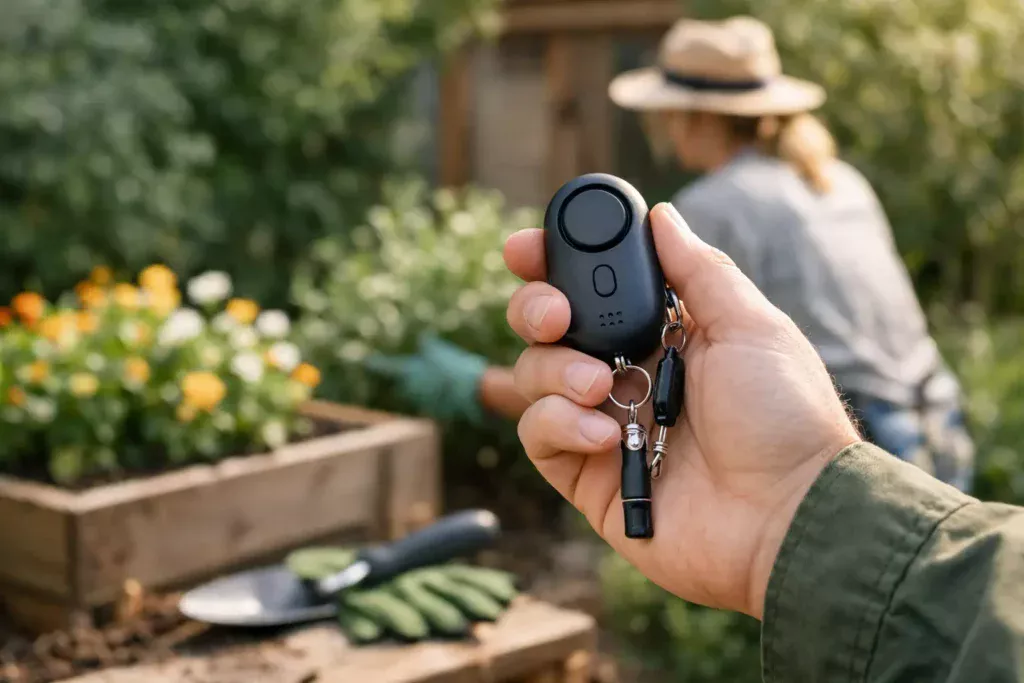
A personal alarm for garden use should not make someone choose between enjoying fresh air and feeling safe. Watering pots, putting out washing, feeding birds or taking a quiet moment on the patio are ordinary parts of independent life. But if a fall, sudden illness or spell of dizziness happens outside, getting back indoors to reach a phone may not be possible.
The right alarm keeps help within reach without turning time in the garden into a complicated routine. For the wearer, that means confidence to continue doing what they enjoy. For family and friends, it means reassurance that an emergency is less likely to go unnoticed.
Many traditional personal alarms are designed around a limited area inside the home. They may work well in the lounge or bedroom, yet lose connection at the back door, near a shed or at the far end of the garden. This can leave a gap precisely when someone is on their own and less likely to have a phone in their pocket.
Gardens also create different risks. Paths can be uneven, paving can become slippery after rain, and a simple trip over a hose, step or raised bed can have serious consequences. Health conditions can make sudden weakness, breathlessness or loss of balance more likely too. The concern is not that someone should stop gardening. It is that they should be able to call for help quickly if they need it.
A wearable alarm is often more useful than relying on a mobile phone outdoors. Phones are easily left on a kitchen counter, put down while working or difficult to reach after a fall. A wrist-worn alarm stays with the person, including when both hands are busy.
Start with the simplest question: if help is needed in the garden, can the wearer raise an alert without finding or operating another device? A good system should make that answer clear.
The emergency action needs to be easy to remember and easy to use under stress. Small touchscreens and multiple menu options can be difficult if someone is frightened, in pain or has reduced dexterity. A straightforward physical action, such as squeezing buttons on a wristband, is easier to practise and repeat.
It also matters who receives the alert. Some systems contact chosen family members, friends or carers, while others connect to a monitoring service. Neither approach is automatically right for every household. A family-alert system may suit people with a nearby, responsive support network. A monitored service can be preferable where relatives live further away or cannot always answer. What matters is having a clear plan for who will respond and what they should do.
Do not assume that an alarm covers the entire garden because it works in the home. Coverage can be affected by the distance from the home base unit, the size and layout of the property, thick walls, metal structures, outbuildings and where the wearer spends time.
Before choosing, think about the normal routine. Is it a small paved courtyard just beyond the kitchen? Is there a long garden with a greenhouse, garage or vegetable patch at the end? Is the front garden used as often as the back? These details shape what dependable coverage looks like.
A home base station can provide protection across the home and garden, but the practical range should always be considered in relation to the individual property. If the garden is unusually large, split across levels or separated by substantial walls, ask how coverage can be checked. Testing the places someone regularly goes is more useful than relying on a general range claim.
A manual SOS alert is essential, but it cannot cover every situation. After a severe fall, a person may be unconscious, confused, unable to move or simply too shaken to use the alarm. Automatic fall detection adds another layer of protection for these situations.
No fall-detection technology can promise to identify every fall, and an alarm should not replace sensible precautions or medical advice. It can, however, provide valuable reassurance when a serious incident means the wearer cannot summon help themselves. For someone who has fallen before, lives with a condition affecting mobility or spends time alone in the garden, this may be a deciding factor.
An alarm only protects someone when it is being worn. If it is bulky, uncomfortable, needs to come off in the shower or requires frequent charging, it can end up on a bedside table at the wrong moment.
Look for a waterproof, wearable design that fits naturally into everyday life. Garden jobs do not always stop for rain, and a person may move from gardening to washing their hands, showering or resting without thinking about their alarm. Continuous wear removes one more thing to remember.
Battery life matters for the same reason. Regular charging can be difficult for people with poor memory, limited hand strength or little confidence with technology. An alarm with a year-long battery life avoids a repeated charging task and helps keep protection in place through the whole routine.
Garden time is only one part of an independent day. The most reassuring arrangement is one that supports the wearer at home, outdoors nearby and when away from the house.
Scheduled check-ins can be especially useful for people who live alone. The wearer confirms that they are all right at agreed times. If they do not respond, their support network is alerted to check in. This can bring peace of mind without requiring a relative to telephone repeatedly or ask someone to give up their privacy.
For trips beyond the garden, some modern systems can work with a smartphone app. The wearer does not need to operate the app when an emergency occurs, but keeping their phone nearby extends the ability to send alerts while out and about. This is useful for a walk to the shops, a visit to friends or a holiday in the UK.
The best approach is usually layered: a manual SOS for moments when the wearer can call for help, automatic fall detection for severe falls, and check-ins for reassurance when there has been no contact. Each feature addresses a different worry. Together, they support independence without asking someone to become more technical or more cautious than they want to be.
A personal alarm is not just a product decision. It is part of an emergency plan for you and your family. Ask where it will work, how an alert is raised, who is contacted and what happens if the wearer cannot respond.
It is also worth considering the ordinary details. Can it be worn in the shower? Will it be comfortable in bed? How often does it need charging? Does the wearer have to remember to take a phone into the garden? Can the family receive alerts wherever they are? Clear answers make it easier to compare options fairly.
Acticheck is designed around this everyday reality: a waterproof, pacemaker-safe wristband with a manual squeeze SOS, scheduled “I’m OK” check-ins and automatic detection of severe falls. Its home base station supports coverage around the home and garden, while its phone apps can extend protection away from home when the phone is nearby. The wristband runs for a full year without recharging, so it can be worn day and night rather than treated as another device to manage.
Even the most dependable alarm works best when everyone knows their role. Decide who receives alerts first, who has a key or can get to the home quickly, and when an emergency service should be called. If several relatives are involved, agree this before an alert happens rather than during a stressful moment.
Show the wearer how to activate the alarm and let them practise once or twice. Keep the explanation calm and simple: if you need help, squeeze the buttons. This is not about making someone feel watched. It is about ensuring help is at hand if they need it.
Also review garden hazards alongside the alarm. Secure loose paving where possible, keep paths clear, use a hose reel and make sure outdoor lighting is adequate. These changes reduce risk, while the alarm provides a way to act if something still goes wrong.
Time in the garden should remain a pleasure, not a source of worry. With an alarm that is easy to wear, simple to activate and dependable where it is needed, a loved one can keep enjoying their own outdoor space with greater confidence – and you can feel reassured that, whatever happens, help can be called.