

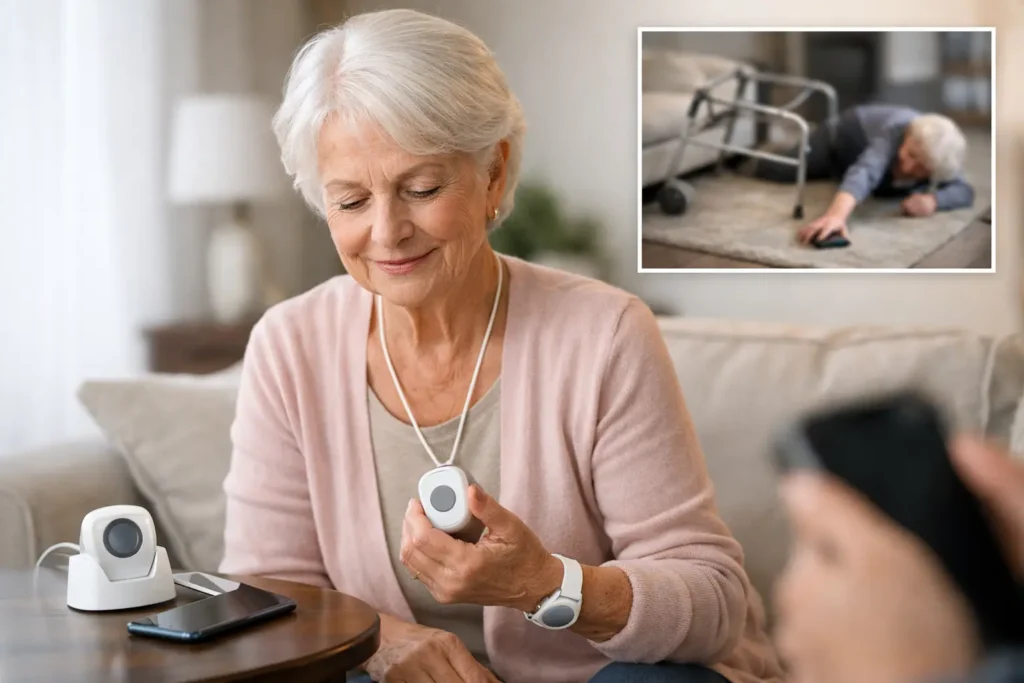
A fall beside the bed, sudden dizziness in the kitchen or feeling unwell in the shower can become far more serious when nobody else is there to notice. An alarm for elderly living alone is not about taking away independence. It is about making sure help can be called when a person cannot reach the phone, speak clearly or get to the front door.
For families, the worry is rarely limited to one dramatic event. It is the unanswered call, the missed routine and the thought of a loved one waiting too long for help. The right personal alarm creates a practical safety net while allowing someone to carry on living in their own home, on their own terms.
A dependable alarm must work at the moment it is needed, not simply look reassuring in a drawer. That begins with wearing it. If a device is awkward, needs regular charging or comes off for bed and bathing, it may be unavailable during the very moments when risk is highest.
A good solution should give the wearer more than one way to raise concern. A manual SOS alert is essential: if someone feels faint, is in pain, has had a minor fall or is frightened, they should be able to call for help simply and quickly. A wearable with clear, tactile controls is often easier to use than a small pendant or a smartphone screen, especially for someone with reduced grip, arthritis or poor eyesight.
It also helps to have protection when the wearer is unable to press a button. Automatic fall detection can identify a severe fall and trigger an alert, offering an extra layer of reassurance if someone is unconscious, confused or unable to move. No fall detector should be treated as a replacement for a person checking in, as not every fall follows the same pattern. It is most useful alongside a manual alert and a regular check-in routine.
Scheduled ‘I’m OK’ check-ins provide that further layer. Rather than waiting for an emergency, the wearer confirms they are alright at an agreed time. If they do not respond, their family or support network can be alerted to check what is happening. This can be particularly valuable for someone with a long-term condition, recent illness or a history of falls.
The most useful alarm is one that works through the everyday places where life happens. Many incidents occur at home, but not always in the sitting room within reach of a phone.
Consider where the person spends time. They may be hanging washing in the garden, getting up in the night, taking medication in the kitchen or showering. A home base station can give reliable coverage around the house and garden, allowing the wearer to call for help without carrying a phone from room to room.
Water resistance matters more than it may first appear. Bathrooms are a common place for slips and sudden illness, yet a pendant taken off before a shower cannot offer protection there. A waterproof wrist-worn alarm that can stay on in bed and in the shower is better placed to protect the wearer continuously.
Comfort matters, too. The alarm should feel like part of a normal routine rather than a medical label. When it is light, discreet and comfortable enough to wear overnight, there is less chance that it will be left on a bedside table.
Independence should not stop at the front gate. A person may visit friends, walk to the shops, go to an appointment or stay with family. An alarm limited to the home may be right for some people, but it leaves a gap for anyone who still enjoys getting out.
For protection away from home, ask how the device connects. Some systems rely on the wearer actively using an app or remembering to take several pieces of equipment. That may not suit someone who is not confident with technology. A simpler arrangement can use a smartphone connection in the background, provided the phone is nearby, so the wristband remains the familiar way to ask for help.
There is a trade-off here. Added mobile coverage can depend on the phone being charged, switched on and carried close enough to connect. It is worth discussing this honestly with the wearer rather than assuming every solution works everywhere in the same way.
When comparing alarms, families often begin with price. Cost matters, but the daily practical details usually decide whether an alarm will be used and trusted.
Battery life is one of the biggest considerations. A rechargeable device can work well if charging is already a reliable habit. However, it can become a weak point for someone who forgets, finds cables fiddly or does not want to take their alarm off overnight. A wristband with a full-year battery removes that regular task and helps keep protection in place.
The alert process should be clear to everyone involved. Before choosing, establish who receives an alert, what information they receive and what happens if the first contact does not answer. A family member may be nearby and happy to respond, while another household may prefer a wider circle of relatives, neighbours or carers. There is no single right set-up, but it must be agreed in advance.
It is also sensible to check whether the system is suitable for the wearer’s health needs. For example, someone with a pacemaker should look for a device designed to be pacemaker-safe. If they have dementia, Parkinson’s or limited hand strength, the trigger action needs to be especially straightforward. If they are reluctant to wear anything visible, comfort and appearance may be the deciding factors.
A personal alarm works best when the wearer feels it is for them, not something imposed on them. Adult children can be tempted to lead with their own anxiety: ‘I need to know you are safe.’ A gentler starting point is to ask what would help the person feel confident staying independent.
They may say they worry about slipping in the bathroom, being unable to reach the phone after a fall or feeling unwell at night. That makes the benefit immediate and personal. The conversation becomes about preserving choice, not monitoring every move.
Once an alarm has been chosen, set it up together and practise using it. Confirm the alert contacts, agree what they should do when an alert arrives and make sure the wristband is worn where it can be reached easily. A practice alert can remove uncertainty for both the wearer and their family. It also shows that asking for help is not making a fuss – it is using the safety plan that everyone has agreed.
The best alarm depends on the person’s routine and level of risk. Someone who is mostly at home may prioritise simple home and garden coverage. Someone who regularly goes out alone may need protection that continues beyond the base station. A person recovering from a fall may value automatic detection and check-ins, while someone with arthritis may focus first on how easy the SOS control feels to use.
Acticheck brings these needs together in a wearable wristband designed for continuous everyday protection. It offers a squeeze-button SOS alert, scheduled ‘I’m OK’ check-ins and automatic severe-fall detection, with a base station at home and smartphone-supported coverage when out. It is waterproof, pacemaker-safe and designed to run for a full year without charging, helping it stay on through showers, sleep and ordinary life.
The technology should never be the centre of the decision. What matters is whether the wearer can live with confidence, knowing that help is at hand if something goes wrong. For family and friends, that reassurance can replace some of the constant wondering with a simple, respectful plan: whatever happens, wherever it happens, whenever it happens, someone can be alerted.