

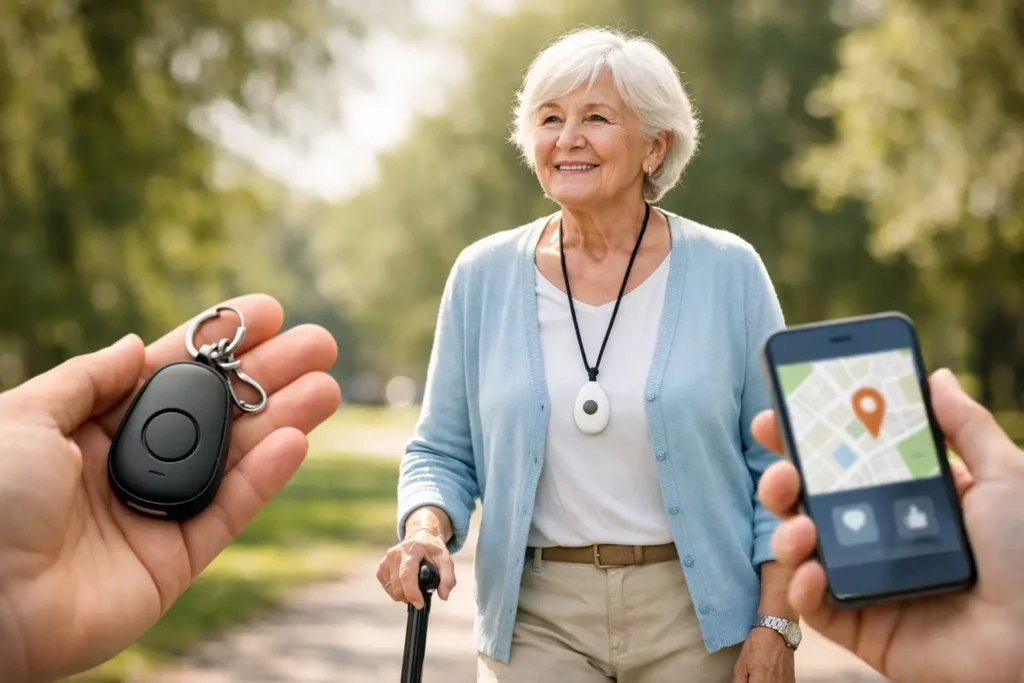
A fall in the bathroom, sudden dizziness in the garden or feeling unwell while walking to the shops can become far more frightening when no one knows it has happened. Personal alarms give you a simple way to raise the alarm, while helping you continue living life on your own terms.
For many people, the real benefit is not simply having a button to press. It is knowing that help can be requested without finding a phone, remembering a number or hoping someone happens to call at the right moment. For family members, it offers reassurance without turning every day into a check-up.
A personal alarm is a device worn or kept close by that sends an alert when its wearer needs help. It may contact relatives, friends, carers or a monitoring service, depending on the system. Some alarms work only inside the home, while others can provide protection when the wearer is outside too.
The right alarm should fit around a person’s normal routine, rather than making that routine harder. If somebody is most at risk overnight, in the shower, while taking the bins out or when walking the dog, the alarm needs to be available at those times. An alarm left on a bedside table, charging in another room or taken off before washing cannot help when it matters most.
Personal alarms are often considered after a fall, a hospital stay or a change in health. They can also be a sensible choice before anything has happened. Reduced balance, a heart condition, diabetes, epilepsy, limited mobility or living alone may all make it harder to summon help quickly after an emergency.
Not every emergency looks the same. A good safety plan recognises the difference between needing help now, being unable to ask for it and simply needing to show that all is well.
The most familiar feature is an SOS action. On a wearable wristband, this should be quick and easy to perform, even if the wearer feels shaken or has limited dexterity. A clear action, such as squeezing two buttons, can be more practical than navigating a touchscreen or trying to use a mobile phone with wet hands.
When considering an alarm, ask what happens after the alert. Who receives it? Can more than one person be contacted? Will they know whether the wearer is at home or away? The people who are expected to respond should understand the arrangement in advance, including when to call the wearer, visit them or contact emergency services.
Some emergencies do not involve a fall or a conscious decision to press an SOS button. A daily check-in adds another layer of reassurance. At an agreed time, the wearer confirms they are okay. If they do not respond, nominated contacts are alerted so they can check what is wrong.
This can be particularly useful for someone who lives alone and values their privacy. It avoids the need for relatives to ring repeatedly, yet provides a prompt if a usual routine is missed. It is not about surveillance. It is a practical agreement that if something is out of the ordinary, somebody will notice.
Automatic fall detection can alert others after a severe fall, even if the wearer cannot press the alarm. That matters if a person is unconscious, confused, injured or unable to reach the wristband properly.
There is a trade-off to understand. Fall detection technology looks for patterns associated with a serious fall, rather than detecting every stumble, slide or gentle descent to the floor. It should support a manual SOS feature, not replace one. If you are able to ask for help, pressing the alarm remains the clearest way to do so.
Many traditional alarms rely on a pendant and a base unit in the home. This can be a good solution for someone who is rarely out, provided the pendant is worn and the home has reliable coverage. However, life does not stop at the front door.
The garden, driveway and local shops are common places for slips, trips and sudden illness. For people who enjoy visiting friends, attending appointments or taking a holiday in the UK, an alarm that works only in one room can feel restrictive.
Look for a system that provides dependable coverage throughout the home and garden, then extends protection when the wearer is away. Some wearable alarms use a home base station indoors and connect through a mobile phone when out. The wearer should not need to operate an app during an emergency, but they may need to keep their mobile phone nearby when away from home.
This approach can offer a useful balance. At home, the base station handles the connection. Outside, the mobile phone helps maintain protection without adding a complicated routine for the person wearing the alarm.
An alarm can have impressive features on paper and still be unsuitable if it is uncomfortable or awkward to live with. The best choice is often the one somebody will wear every day, including at the times they might otherwise be tempted to remove it.
Waterproofing is a key consideration. Bathrooms are a common place for falls, and taking an alarm off to shower creates a gap in protection. A wristband that can stay on in the shower and in bed makes safety part of the routine rather than another item to remember.
Charging is another overlooked issue. Rechargeable devices can be useful, but they depend on someone remembering to charge them and putting them back on afterwards. For an older person, a device with a full-year battery life may remove a regular source of worry and reduce the chance of an avoidable gap in cover.
Comfort, appearance and safety also count. A wristband should not feel clinical or cumbersome. If the wearer has a pacemaker or other health concern, check that the product is suitable before buying. Clear instructions, a simple set-up process and UK-based support can make a significant difference for both the wearer and the family member helping to organise it.
It is easy to focus on your own worry when choosing an alarm for a parent, partner or friend. Start instead with their everyday life. What do they want to keep doing? Where do they spend time? What would make them feel safer without making them feel watched?
A person who spends most days at home may prioritise garden coverage, shower-safe wear and an easy SOS action. Someone who regularly goes out alone may need protection that continues beyond the home. If they have fallen before or may be unable to call for help after a collapse, automatic fall detection and missed check-ins could be especially valuable.
It also helps to be honest about who will respond. Family alerts work well when relatives are available, live reasonably nearby or can arrange help quickly. A monitored service may suit families who cannot reliably answer alerts themselves. Neither approach is automatically better. The right option depends on the support network, budget and the level of reassurance everyone needs.
Before choosing, talk through a few real situations together: a fall at night, feeling faint in the shower, no response to a morning check-in, or an incident while out. If the response is clear and manageable in each case, the system is likely to be a good fit.
The most useful alarm is not a reminder of what might go wrong. It is a quiet source of confidence that makes ordinary life feel more possible. That might mean showering without waiting for someone to be nearby, sitting in the garden with a cup of tea, or going out knowing that help is at hand.
Acticheck combines a wearable SOS wristband, daily “I’m OK” check-ins and automatic severe-fall detection, with home-and-garden coverage through a base station and protection away from home when a mobile phone is nearby. Its wristband is waterproof, pacemaker-safe and designed to be worn continuously for a year without charging.
Whatever system you choose, involve the person who will wear it. Let them try the alarm action, wear it around the house and decide where it fits into their routine. The aim is simple: if help is needed, they should be able to get it without losing the independence they value.