

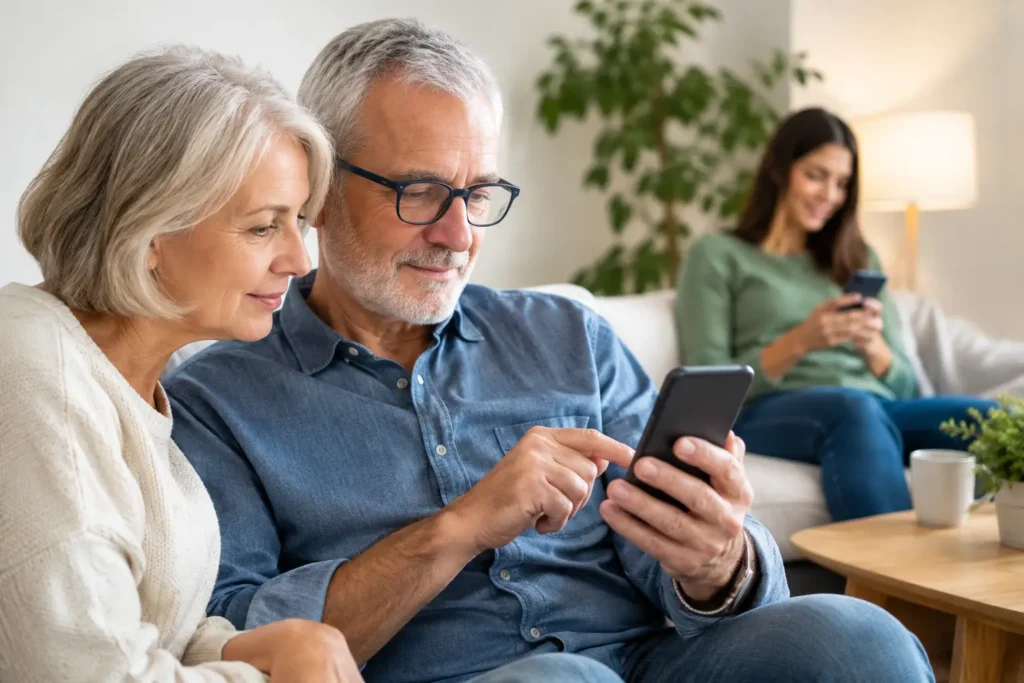
A missed call should not have to send the whole family into a panic. The best answer to how relatives monitor safety is not to check up constantly. It is to put calm, reliable support in place, so a loved one can carry on living their own life while help is easier to reach if something goes wrong.
For many families, the worry is not about everyday tasks. It is about the moments nobody can predict: a fall in the bathroom, sudden dizziness in the garden, feeling unwell overnight, or being unable to reach a phone. A good safety arrangement covers those moments without making the person at its centre feel watched, managed or less capable.
Every family has a different reason for seeking reassurance. One person may be steady on their feet but live with a heart condition. Another may have had a previous fall and worry about getting up again. Someone who is perfectly confident at home may feel less secure when walking to the shops or visiting friends.
Begin with a respectful conversation about what feels difficult, rather than leading with what you think they should do. Ask where they would be most likely to need help, whether they always carry a mobile phone, and what would make them feel safer without being a nuisance. The aim is not to build a list of restrictions. It is to agree on practical protection that fits their normal routine.
It also helps to be honest about the limits of family contact. A daily call can be lovely, but it cannot guarantee that someone is safe between calls. Location sharing may suit some people, but it cannot tell you whether they have fallen in the shower or are too unwell to use their phone. Different tools solve different problems.
The strongest arrangements are based on consent, clarity and proportion. Your relative should know what support is in place, who will be contacted and what will happen if they need help. Nothing should feel like a hidden form of surveillance.
Agree a simple routine for ordinary days. This might be a morning message, a call after an appointment, or a quick check-in at a time that suits them. Keep it realistic. If a routine is too demanding, it will soon become stressful for everyone and may be abandoned.
Then make a separate plan for missed contact. Decide how long you will wait before trying again, who has a spare key if appropriate, and which nearby friend, neighbour or relative could check in. Make sure emergency contact details are current, and that relevant people know about allergies, medication or access needs if your loved one is happy for that information to be shared.
A safety plan works best when it is written down in plain language. It prevents confusion in a worrying moment and stops one family member feeling solely responsible for every decision.
A personal alarm can fill the gap between routine family contact and an emergency. The right device should be simple enough to use under pressure. If somebody is in pain, frightened or disorientated, they should not have to find glasses, remember a passcode or work through an app menu.
A wearable alarm is particularly useful because it stays with the person. It can be worn around the home, in the garden and, with the right system, while out and about. This matters in the places where falls often happen: beside the bed, on the stairs, in the kitchen and in the bathroom.
Look carefully at how an alarm works in real life. Consider whether the wearer can raise an alert manually, whether the system asks for regular reassurance through an “I’m OK” check-in, and whether it can detect a serious fall automatically. No fall-detection system can identify every fall or every medical emergency, so it should support, not replace, a clear emergency plan.
Practical details make a real difference. An alarm that needs frequent charging may be left on a bedside table at the wrong time. A device that must be removed for a shower leaves a gap in protection. If it only works close to a base unit, it may not help on a walk, during a visit or on holiday.
Acticheck combines a squeeze-to-alert wristband, scheduled “I’m OK” check-ins and automatic severe-fall detection, with home coverage from a base station and added protection away from home when a connected smartphone is nearby. Its waterproof wristband can be worn in bed and in the shower, and its battery lasts a full year without charging. That kind of low-effort protection can be especially valuable for someone who does not want another device to manage.
Technology is only useful when everyone understands what happens after an alert. Avoid creating a complicated chain involving too many people. Choose a small group of dependable contacts and talk through their roles in advance.
For example, one person may be the first contact, a second may be the back-up, and a nearby neighbour may only be called if family cannot get there quickly. Consider who is likely to answer during working hours, overnight and when travelling. It is better to have two people who reliably respond than six people who assume somebody else will act.
Test the arrangement together. Try a manual alert when everyone is calm. Check that phone numbers are correct, notifications are visible and the wearer knows what an alert feels or sounds like. If the system includes check-ins, make sure the timing is sensible. A check-in during a regular nap, hospital appointment or weekly class may create unnecessary concern.
Review the plan after a fall, illness, house move or change in confidence. What worked six months ago may no longer be the right level of support. Safety monitoring should adapt as needs change, not become a fixed label that takes away independence.
Families can accidentally make a safety plan feel controlling. Repeated calls, demands for immediate replies or criticism when somebody forgets a check-in can make a loved one less likely to engage. Reassurance should reduce anxiety on both sides, not create another obligation.
Give your relative choices wherever possible. They may prefer a wristband to a pendant, a check-in at lunchtime rather than breakfast, or one particular family member as their main contact. These preferences are not minor details. They are what make the arrangement more likely to be worn, used and trusted.
It is also worth recognising that independence includes the right to make reasonable choices. The goal is not to eliminate every risk – no system can do that. It is to make sure that, if help is needed, there is a dependable route to raise the alarm and a clear plan for someone to respond.
The most effective monitoring is often the least intrusive. A familiar routine, a clear response plan and a wearable alarm can provide protection without asking someone to change who they are or where they go.
When support is easy to wear, easy to use and ready whenever it is needed, relatives can worry less about the unanswered call and focus more on the time they spend together. Whatever happens, wherever it happens, help should feel close at hand.