

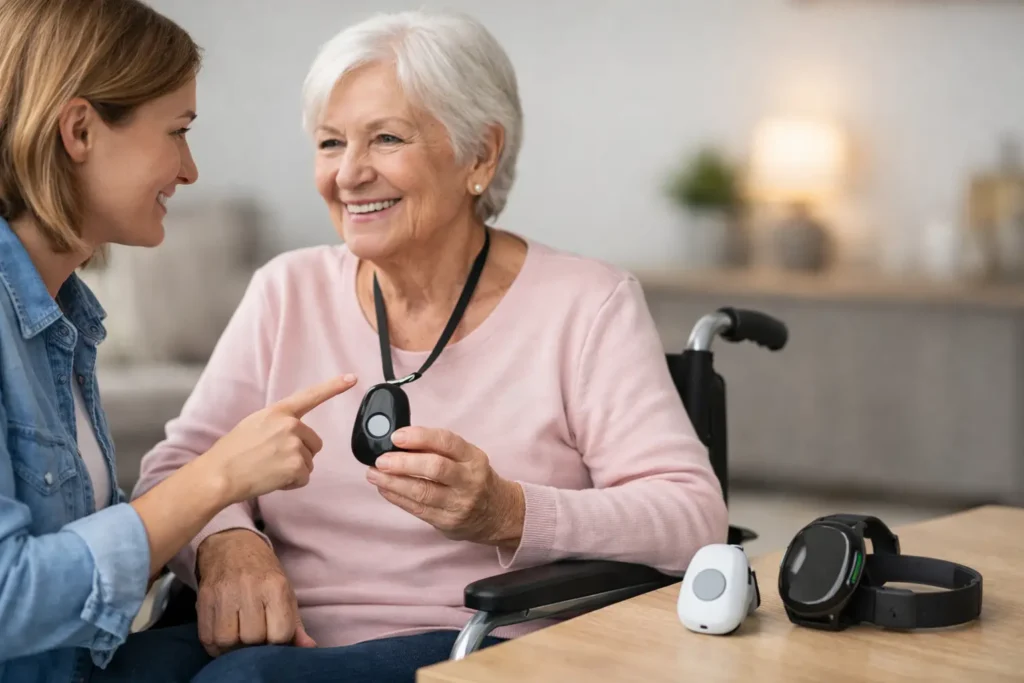
A fall in the bathroom. Sudden breathlessness while making tea. Feeling unwell in the garden with a mobile phone left indoors. These are the moments when a personal alarm for disabled adults can make a meaningful difference: not by taking away independence, but by making sure help can be called when it is needed.
The right alarm should fit around real life. It needs to be simple enough to use under stress, comfortable enough to wear every day and dependable enough that you or your loved one does not have to keep wondering whether it is charged, nearby or connected. For families, that brings reassurance without turning every phone call into a welfare check.
At its simplest, a personal alarm gives someone a quick way to raise an alert. But needs differ widely. A person with reduced mobility may be most concerned about falls. Someone living with a long-term condition may need a way to call for help if they become dizzy, weak or confused. Another person may be physically able but feel vulnerable when alone.
That is why it helps to look beyond the word “alarm”. Consider what happens after it is activated, where it works and whether it will still be worn when an emergency occurs.
A useful personal alarm should make it possible to alert chosen family members, friends or carers quickly. It should also support the wearer when they cannot easily reach a telephone, explain what has happened or get up after a fall. The aim is practical: help should be at hand, while the person remains in control of their own routine.
The most effective alarm is usually the one that is worn consistently. A device left charging on a bedside table offers little help in the shower, in bed or outside hanging washing.
For many disabled adults, a wrist-worn alarm is easier to make part of the day. It can stay on during ordinary activities, rather than needing to be found and put on only when someone is going out. Look for a waterproof design if showering is part of the concern. Falls and sudden illness do not wait for convenient moments, and bathrooms are a common place to be without a phone.
Battery life matters for the same reason. Frequent charging creates a gap in protection and adds another task to remember. A device with a long battery life can reduce the chance of it being left off overnight or put aside because it needs power.
Comfort is not a minor detail either. The wristband should be suitable for day and night use, without feeling clinical, heavy or awkward. If the wearer has sensitive skin, limited hand movement or uses a pacemaker, check that the device is appropriate for their individual needs before buying.
In an emergency, complicated instructions are no help. A clear action, such as pressing or squeezing buttons on a wristband, can be easier than unlocking a mobile phone, finding an app and making a call.
Think about the wearer’s dexterity and strength. Can they use small buttons? Would a pendant be easier to reach than a wristband? Is speech difficult during periods of illness or anxiety? The best choice is the one they can operate confidently, even when tired, distressed or lying on the floor.
It is worth practising together once the alarm arrives. Make sure the wearer knows exactly what to do, and make sure every person in their support network understands what an alert means and how they should respond.
Some alarms work only within a limited distance of a base unit. This can suit a small property, but it may be less useful if the person spends time in a larger home, uses an upstairs bedroom or enjoys their garden.
Ask where the device is designed to work. A home base station can provide broad coverage throughout the house and garden, rather than relying on the wearer keeping a mobile phone in their pocket. That can be especially valuable for someone who does not use a smartphone regularly, or who tends to leave it in another room.
Also consider what happens beyond the front door. Trips to the shops, appointments, visits to friends and holidays can all be part of an independent life. Some personal alarms use a smartphone connection to extend protection while out and about. In that case, the mobile phone may need to be nearby, switched on and connected, so it is sensible to be clear about the practical limits.
This is not a reason to avoid mobile protection. It is simply a reason to choose a system that suits the wearer’s habits. Someone who always carries a mobile phone may benefit greatly. Someone who often leaves it behind may need family to plan around that limitation.
A manual SOS alert is essential, but it cannot cover every situation. A person may be too unwell to press the buttons, may lose consciousness or may not realise how serious a fall is.
For that reason, some systems combine several forms of protection. Scheduled “I’m OK” check-ins can flag when a routine response is missed. Automatic severe-fall detection can raise an alert if the device detects a significant fall. Together with a manual SOS action, these features provide layers of reassurance rather than relying on one single moment of action.
There are trade-offs. Fall detection cannot identify every fall, and it may not be suitable as the only safeguard. A slow slide from a chair or a collapse without a sharp impact may not be detected in the same way as a severe fall. It should sit alongside a simple manual alert and a clear family response plan.
Check-ins are also most helpful when they are realistic. A daily prompt may suit one person; another may find it intrusive or forget it during an active day. The point is not to monitor someone unnecessarily. It is to notice when an expected sign of wellbeing is missing, so a loved one can check in sooner.
Before choosing a personal alarm, talk openly about the response. Will alerts go to adult children, neighbours, friends or a professional monitoring service? Is there always someone available to respond? Who has a key, knows relevant medical information or can contact emergency services if necessary?
A family-led system can feel personal and immediate. It may be ideal where relatives are nearby and happy to share responsibility. Professional monitoring may be preferable where family live further away, work unpredictable hours or need a formal response arrangement. Neither option is automatically better. What matters is that the plan is reliable at the time help is needed.
Avoid assuming that an alert alone solves everything. The people receiving it should know the wearer’s address, any access arrangements and what to do if they cannot make contact. A short written plan shared with everyone involved can prevent confusion when minutes matter.
A personal alarm should be discussed with the person who will wear it, not chosen solely for them. Some people worry that an alarm means they are losing freedom. In practice, the right one can do the opposite. It may help them feel confident showering, sleeping alone, spending time in the garden or going out without fearing that they will be unable to summon help.
Use language that respects this. Rather than saying an alarm is there to “watch” someone, describe it as a way to call for help and let family know they are safe. Let the wearer choose the style, decide who receives alerts where possible and take part in testing it.
Acticheck is designed around this kind of low-effort protection, combining a squeeze-to-alert wristband, scheduled check-ins and severe-fall detection. Its waterproof, year-long battery design is intended to stay with the wearer through ordinary life, at home and when their mobile phone is nearby while out.
Do not be swayed by a long feature list alone. Focus on the moments that worry you most. Is the main concern a fall at night, a health episode when alone, getting help in the shower or reassurance during trips away from home?
Then check the practical details: where the alarm works, whether there are ongoing charges, how alerts are delivered, what battery maintenance is needed and whether the wearer can comfortably operate it. If a family member will set up the system, make sure they understand how to add contacts, respond to notifications and test it from time to time.
The best personal alarm is not necessarily the one with the most technology. It is the one your loved one will wear, can use without hesitation and has a response plan behind it. When that is in place, independence can feel less uncertain – whatever happens, wherever it happens, whenever it happens.