

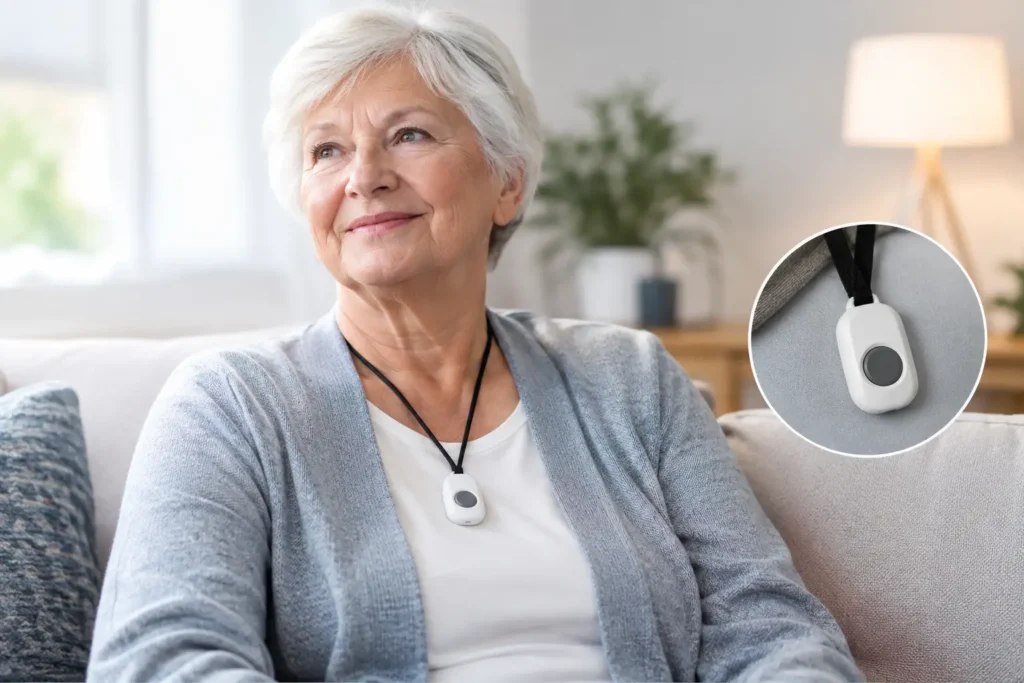
A fall in the bathroom. A sudden dizzy spell while making tea. Feeling unwell during the night and not being able to reach the phone. These are the moments behind the question: who needs telecare? It is not only for someone who already needs daily care. Telecare can provide a practical safety net for people who value living independently but may not always be able to call for help.
For many families, the concern is not what happens during an ordinary day. It is what could happen in the few minutes when a loved one is alone, frightened, injured or unable to get to the telephone. The right support can mean help is at hand without taking away privacy, routine or confidence.
Telecare is often a sensible option when there is a realistic chance that someone could need urgent help and struggle to summon it themselves. That risk can be temporary, changing or long-term. It does not need to mean that a person is frail, housebound or unable to manage their own life.
Someone may be perfectly capable of shopping, cooking, seeing friends and enjoying hobbies, yet still be more vulnerable after a fall, illness or change in mobility. A personal alarm can sit quietly in the background, ready for the unexpected.
Falls are one of the clearest reasons to consider telecare. A person may have had a previous fall, become less steady on their feet, use a walking aid, or take medication that can cause dizziness. Stairs, loose rugs, wet bathroom floors and getting up at night can all create difficult moments.
The risk is not only the fall itself. It is the possibility of being unable to stand, reach a phone or attract attention. That can be especially worrying for someone who lives alone, but it can also affect people whose partner is out, asleep or unable to assist.
A wearable alarm gives the wearer a way to call for help from where they are. Systems with automatic severe fall detection can add another layer of protection where a person may be unconscious or unable to press an alarm button. Automatic detection is helpful, but it should not replace a manual SOS option, as not every fall will be detected and not every emergency involves a fall.
Living alone should not mean feeling confined to the house or anxious about being out of sight. Many older people want to remain in the home they know, keep their own timetable and make their own choices. Telecare can support that independence rather than restrict it.
It can also be appropriate for someone who does not live alone but is regularly alone during the day, overnight or while a relative is at work. If an incident happens in a quiet house, a wearable alarm is often more useful than a telephone on a table in another room.
The best arrangement depends on everyday habits. For somebody who is rarely without a mobile phone and feels confident using it, a phone-based solution may be enough. For somebody who forgets where their phone is, cannot always reach it, or would find an app difficult in an emergency, a simple wrist-worn alarm is usually more dependable.
Telecare can be useful for people with conditions that may cause a sudden loss of balance, pain, weakness, breathlessness, confusion or fatigue. This can include heart conditions, diabetes, Parkinson’s, epilepsy, arthritis, multiple sclerosis, dementia in its earlier stages and recovery after a stroke or operation.
Needs vary greatly, even among people with the same diagnosis. The useful question is not simply, “What condition do they have?” It is, “If they needed help quickly, could they reliably get it?”
Some people may only need support for a short period, such as after leaving hospital or while recovering from surgery. Others may want ongoing reassurance as mobility or confidence changes. Telecare can be reviewed as circumstances change. It should fit the person, rather than making the person fit a care plan.
Not every concern is a dramatic emergency. Sometimes the worry is that a person may be unwell, confused or simply unable to get on with their usual routine, without anyone knowing for hours.
Scheduled “I’m OK” check-ins can be valuable for people who usually manage well but have periods when they are more at risk. For example, an older parent may be recovering from a chest infection, starting new medication or feeling less confident after a recent fall. A simple check-in gives them an easy way to confirm that all is well. If they do not respond, their chosen contacts can be alerted to check what is happening.
This approach works best when the wearer understands the routine and is happy to take part. It is a support tool, not a test of whether someone is coping. The language and timing should feel respectful, particularly if the person is sensitive about being monitored.
Adult children and relatives often carry a quiet, persistent concern. They may live an hour away, have work and children of their own, or speak to their parent every day but still wonder what would happen between calls. Repeatedly ringing to check in can become stressful for both sides.
Telecare can reduce that pressure. It gives the wearer a direct route to help and gives family members a clearer plan if something goes wrong. That reassurance matters most when everyone agrees how alerts should be handled. Decide who will be contacted, who has a spare key if appropriate, and when emergency services should be called.
It is worth being honest about what telecare can and cannot do. It does not remove every risk, diagnose an illness or replace visits, medical advice and social contact. What it can do is shorten the gap between an emergency and someone knowing help may be needed.
A good telecare system should be easy enough to use on a bad day, not just easy to understand in a demonstration. The person wearing it should be able to use it instinctively, without finding reading glasses, remembering passwords or charging another device every evening.
For many households, continuous wear is the deciding factor. An alarm left on a bedside table is no help after a fall in the shower. Look for a waterproof wearable that can be worn in bed and in the bathroom, with a battery designed to last for a long period rather than needing frequent recharging.
Coverage matters too. A home base station can provide dependable protection around the home and garden. For time away from home, some systems use a nearby smartphone connection so the wearer can remain protected on visits, walks and holidays without having to actively operate an app. Check how far the protection extends, whether the phone needs to be nearby, and what happens if there is no signal.
Acticheck is designed around these practical realities, combining a squeeze-button SOS alarm, “I’m OK” check-ins and automatic severe fall detection in a waterproof wristband that lasts a full year without charging. The aim is simple: protection that is easy to keep wearing, whatever happens, wherever it happens, whenever it happens.
The person who will wear telecare should be involved from the beginning. A well-meaning family member may see an alarm as obvious reassurance, while the wearer may hear it as a sign that others think they cannot cope. Starting with independence usually helps.
Talk about specific situations rather than labels. “If you slipped in the garden, how would you call us?” is often more constructive than “You need monitoring.” Ask what would make them feel safer and what they would find annoying or intrusive. Their answers can guide the choice.
It also helps to make the system part of an ordinary routine. Wear it while getting dressed, keep the phone charged if out-of-home coverage relies on it, and make sure key contacts understand their role. A short test after setup can build confidence for everyone.
Telecare is not about expecting the worst. It is about making sure an unexpected moment does not take away the independence someone has worked hard to keep.