

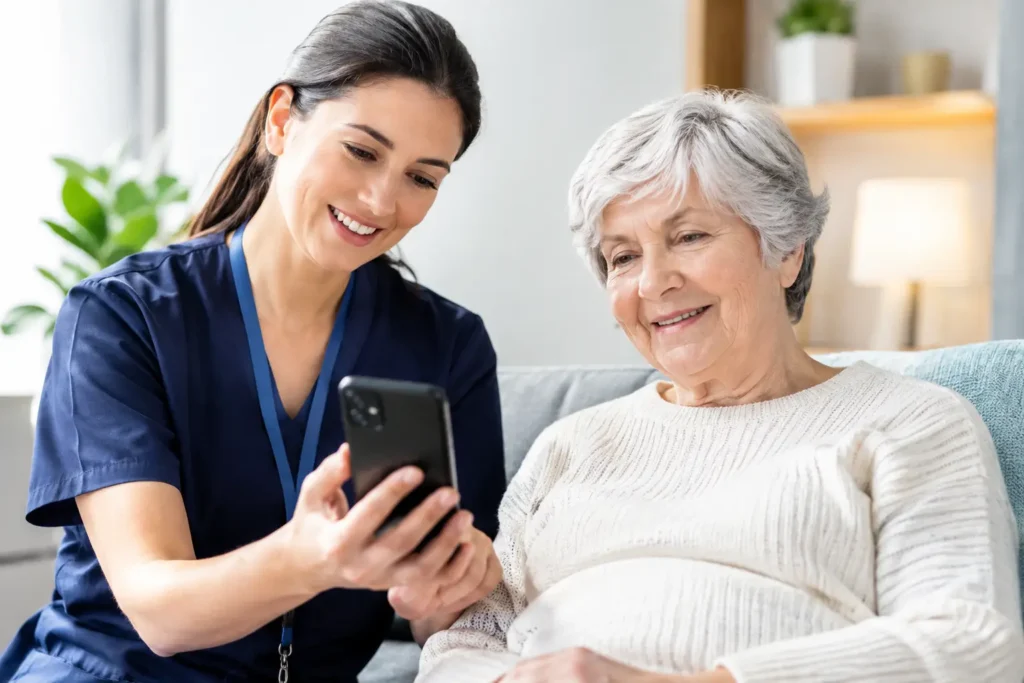
A missed check-in can be the first sign that something is wrong. That is why use scheduled check-ins is such a practical question for anyone living independently, and for the family members who want reassurance without constant calls or intrusion. A simple prompt to confirm “I’m OK” can provide a valuable safety net when a person is unwell, has fallen, feels confused or cannot reach the phone.
Scheduled check-ins are not about monitoring every movement. They are about agreeing on a small, predictable action that helps make sure someone is safe, while leaving them free to get on with their day.
Emergencies do not always begin with a dramatic fall or a clear call for help. Someone may become dizzy, feel suddenly unwell, have low blood sugar, or simply be unable to get up after a difficult night. If they are alone, a family member may not know there is a problem until much later.
A scheduled check-in creates a clear moment when a response is expected. The wearer confirms they are alright at an agreed time. If that confirmation does not happen, the people chosen to receive alerts can act on the information rather than waiting and worrying.
This is especially helpful when regular phone calls are not realistic. A son or daughter may be at work, a neighbour may be away, and a partner may be out shopping. Nobody needs to spend the day repeatedly asking whether everything is alright. The check-in does the quiet, dependable job in the background.
Many people want support, but do not want to feel watched or treated as though they have lost control. Scheduled check-ins can respect that balance. The person wearing the alarm remains in charge of their own routine, while their family has a sensible plan if something is not right.
The check-in itself is straightforward: confirm “I’m OK” when prompted. It does not require typing a message, remembering a password or using a complicated app. For people who are less confident with technology, that simplicity matters.
It can also reduce difficult conversations between families. Instead of a relative saying, “You never answer your phone”, there is a shared arrangement that feels fairer: check in at the agreed time, and help will only be sought if there is a reason to be concerned.
Check-ins can suit a wide range of daily routines. One person may prefer a morning check-in because getting out of bed is their most difficult time. Another may want an evening confirmation, when they are more likely to be alone. Someone recovering from illness might choose more frequent check-ins for a short period, then reduce them as confidence returns.
The right schedule depends on the person, their health, the support available nearby and how quickly someone could reach them. More frequent checks can provide greater reassurance, but they should not become irritating or easy to ignore. The aim is a routine that feels natural enough to keep.
A personal alarm is vital when someone can recognise an emergency and activate it. But there are circumstances where pressing a button may not be possible. A person may be unconscious, disorientated, too weak to move, or unable to reach their wrist after becoming unwell.
This is where scheduled check-ins add another layer of protection. They do not replace an SOS alarm or fall detection. Each deals with a different risk. An SOS action is for when the wearer needs help now. Automatic fall detection can raise an alert after a severe fall. A missed check-in can draw attention to a problem that has developed quietly.
Together, these options help cover the gaps that any single safety measure can leave behind. Whatever happens, wherever it happens, whenever it happens, there should be a practical way for help to be raised.
The worry of not knowing can be exhausting. Adult children often carry that worry alongside work, their own children and responsibilities at home. They may call often, then feel guilty for calling too often. The person receiving the calls may feel equally frustrated, even when they understand the concern comes from love.
Scheduled check-ins offer a calmer arrangement. Family members know that a missed confirmation is a reason to look into things. Until then, they can allow their loved one space and trust them to live independently.
That does not mean a missed check-in always signals an emergency. The person may be in the shower, asleep, chatting to a visitor or have forgotten the prompt. A good response plan allows for this. Start by trying to call, then contact a nearby neighbour, friend or relative if needed. If there is no response and the situation feels urgent, seek appropriate emergency help.
Discussing this plan in advance is important. Everyone should know who receives alerts, who is most likely to be nearby and what action they are comfortable taking. It turns an uncertain situation into a clearer next step.
Safety needs do not stop at the front door. A person may be perfectly capable of going into the garden, visiting friends, taking a short walk or travelling to stay with family, but still benefit from a routine check-in. Maintaining the same familiar habit can be reassuring when surroundings or plans change.
Acticheck combines scheduled “I’m OK” check-ins with a wearable SOS alarm and severe fall detection. At home, its base station supports dependable coverage around the house and garden. Away from home, the wristband can stay connected through a nearby smartphone, helping protection continue without requiring the wearer to operate an app.
For many people, the best safety technology is the technology they can forget about. A wristband that is comfortable enough to wear in bed and in the shower is more likely to be there when it is needed. A battery that lasts a full year also avoids the familiar problem of an alarm being left on charge at the wrong moment.
The most effective setup is usually the simplest one. Choose a time that already fits the person’s day, such as after breakfast or before settling down for the evening. Explain what will happen if they do not check in, and make sure it feels supportive rather than alarming.
It is worth testing the arrangement together. Practise confirming the check-in, check that the right family members receive notifications, and agree what they should do after a missed response. If the person has days when they are more tired, forgetful or at greater risk, take those into account when setting the schedule.
Avoid treating a check-in as proof that everything is always fine. It is a valuable signal, not a medical assessment. Keep ordinary contact, notice changes in wellbeing and seek professional advice when health needs change. A check-in system works best as part of a wider circle of care.
A small daily confirmation can carry a great deal of meaning. It says: you are free to live your life, and if you need help, someone will know to look out for you.